7 Ways to Prevent Seasickness on Your Next Cruise
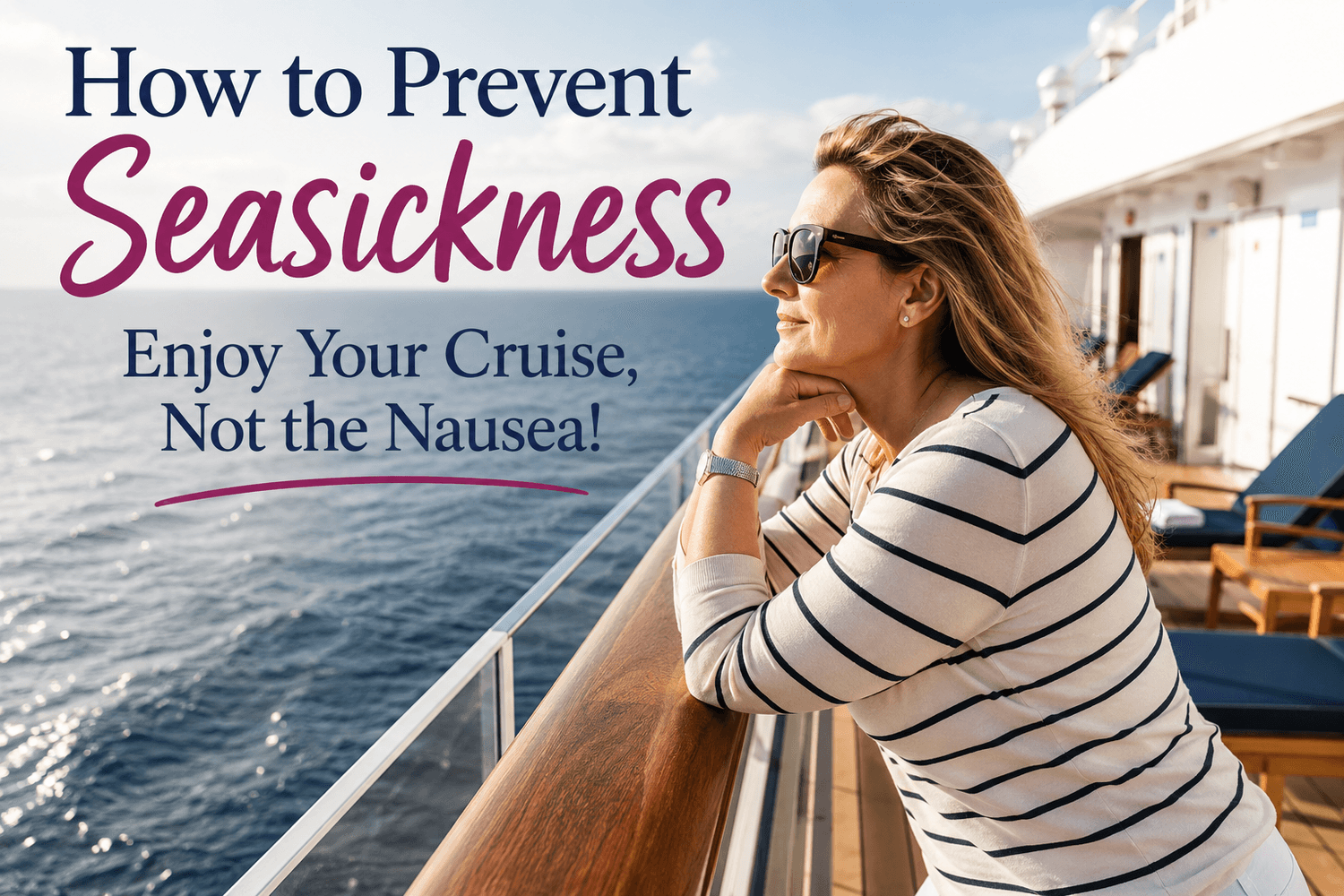
One of the questions I hear from first-time cruisers all the time is:
"What if I get seasick?"
The good news is that modern cruise ships are incredibly stable, and many people never experience motion sickness at all. But if you're worried about spending your vacation feeling queasy, there are several simple things you can do to reduce your chances of getting seasick before you even step onboard.
After more than 30 cruises, I've picked up a few tricks that can make a big difference.
1. Choose a Midship Cabin
If you're booking a cruise and you're concerned about motion sickness, location matters.
The middle of the ship, especially on a lower deck, tends to experience the least movement. The front and back of the ship often feel more motion, particularly when the seas are rough.
When possible, I always recommend choosing a cabin near the middle of the ship if you're prone to motion sickness.
2. Look at the Horizon
If you start feeling a little queasy, head outside and look at the horizon.
Motion sickness happens when your brain receives conflicting information from your eyes and inner ear. Focusing on a fixed point in the distance helps your brain make sense of the movement and often reduces symptoms.
Many cruisers find relief simply by stepping out on deck and watching the ocean.
3. Bring Ginger Along
Ginger has been used for years as a natural remedy for nausea.
Many travelers pack ginger chews, ginger candies, ginger tablets, or even ginger tea bags for their cruise.
It's inexpensive, easy to pack, and many cruisers swear by it.
4. Consider Motion Sickness Medication
If you know you're sensitive to motion, don't wait until you feel sick.
Many experienced cruisers take preventive measures before the ship leaves port.
Popular options include:
Dramamine
Bonine
Prescription Scopolamine patches
Always check with your healthcare provider before taking any medication, especially if you have underlying health conditions or take other prescriptions.
5. Eat Light and Stay Hydrated
What you eat before and during your cruise can make a difference.
Avoid heavy, greasy, spicy, or overly rich foods if you're already feeling unsettled.
Instead, choose lighter foods such as crackers, toast, fruit, or other bland snacks.
And don't forget to drink plenty of water. Dehydration can make motion sickness symptoms worse.
6. Go Easy on the Alcohol
I know that vacation officially starts when many people grab their first drink onboard.
But if you're worried about seasickness, it may be wise to hold off for a bit.
Alcohol can contribute to dehydration and may make feelings of dizziness or nausea worse, especially during the first day of your cruise.
7. Try Sea Bands
Many cruisers use acupressure wristbands, often called Sea Bands.
These bands apply pressure to a specific point on the wrist that some people believe helps reduce nausea.
They're inexpensive, drug-free, and easy to throw in your carry-on bag.
Final Thoughts
Most cruises sail in calm conditions, and many people never experience seasickness at all.
But if you're concerned about motion sickness, a little preparation can go a long way.
Choosing the right cabin, staying hydrated, packing ginger, and having motion sickness remedies available can help you enjoy your cruise instead of worrying about the waves.
And remember, even on the rare occasions when the seas get rough, most cruise ships are equipped with stabilizers designed to minimize movement and keep passengers comfortable.
A little planning now can help ensure your next cruise is smooth sailing from start to finish.
Related Articles
👉What I Always Pack in My Carry-On Bag for a Cruise
👉What Not to Pack for a Cruise
👉First-Time Cruiser Tips: What I Wish I Had Known Before My First Cruise
Affiliate Disclosure: This article may contain affiliate links. If you make a purchase or book a service through these links, I may earn a commission at no additional cost to you. As an Amazon Associate, I earn from qualifying purchases. Thank you for supporting Healthy Living & Thriving.