What Happens If
You Get Sick on a Cruise? Here's What to Expect
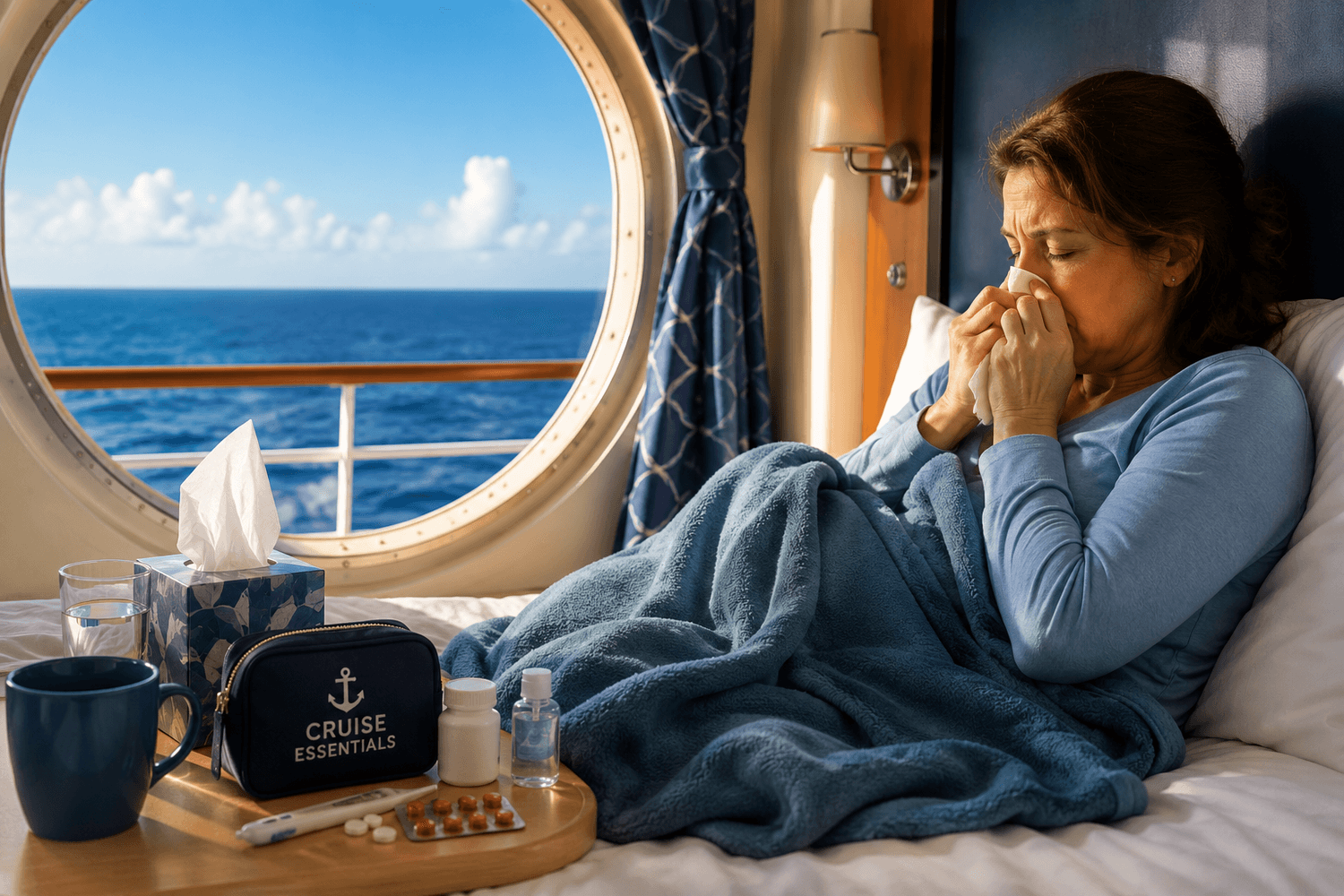
No one plans to get sick on vacation, but it can happen. Whether it's motion sickness, a stomach bug, dehydration, or even a bad sunburn, knowing what to expect before you sail can make an unpleasant situation much less stressful.
The good news? Cruise ships are well prepared to care for passengers with common illnesses and minor injuries, so getting sick doesn't automatically mean your vacation is over.
Cruise Ships Have Medical Centers
Nearly every major cruise ship has a medical center staffed by licensed doctors and nurses who are experienced in treating travelers at sea.
While it's not the same as a full-service hospital, the medical center is equipped to handle many routine medical problems, including:
Motion sickness
Stomach illnesses
Respiratory infections
Dehydration
Allergic reactions
Minor cuts and burns
Sprains and strains
Ear infections
Urinary tract infections
Minor skin infections
Medical centers are usually located on one of the lower passenger decks and are open during scheduled hours. Emergency care is available 24 hours a day.
What Should You Do If You Start Feeling Sick?
If you begin feeling ill, don't ignore your symptoms or hope they'll simply disappear.
For mild problems like seasickness or a headache, over-the-counter medications you packed may be enough. However, if your symptoms worsen or you're unsure what's causing them, it's best to visit the ship's medical center sooner rather than later.
Getting evaluated early may help prevent a minor problem from becoming something more serious.
Will They Have the Medications You Need?
Cruise ship medical centers stock many common prescription and over-the-counter medications, but they don't carry every medication available.
If you take prescription medications, always bring enough for your entire trip plus several extra days in case of unexpected travel delays.
Never pack essential medications in your checked luggage. Keep them in your carry-on bag.
What About Norovirus?
Norovirus is one of the illnesses people associate most with cruising, but outbreaks are actually uncommon.
If a passenger develops vomiting or diarrhea, the medical staff may recommend remaining in your cabin until you've been symptom-free for a certain period. While staying in your cabin isn't anyone's idea of a vacation, it helps protect other passengers and crew members.
Frequent handwashing remains one of the best ways to reduce your risk.
Motion Sickness Is Usually Easy to Treat
Even experienced cruisers can occasionally feel seasick, especially during rough weather.
If you begin feeling nauseated:
Spend time on an open deck.
Look toward the horizon.
Stay hydrated.
Eat light meals.
Visit the medical center if your symptoms become severe.
Many passengers also find relief by packing motion sickness medications before leaving home.
Don't Ignore Dehydration
Between warm weather, walking in ports, and spending time in the sun, dehydration can sneak up quickly.
Watch for signs such as:
Dizziness
Dry mouth
Headache
Fatigue
Dark-colored urine
Drinking water regularly and avoiding too much alcohol can help keep you feeling your best throughout your cruise.
How Much Does Cruise Medical Care Cost?
One surprise for many first-time cruisers is that visits to the ship's medical center are not included in your cruise fare.
You'll typically be responsible for charges such as:
Office visits
Medications
Lab work
X-rays, if needed
IV fluids and treatments
Costs vary by cruise line and the type of care you receive.
Is Travel Insurance Worth It?
Travel insurance may help cover unexpected medical expenses during your cruise, depending on your policy.
If you're traveling internationally or have ongoing medical conditions, it's worth reviewing your coverage before you sail so you understand what's included.
A Little Preparation Goes a Long Way
Most cruises are completed without anyone needing medical care, but it's reassuring to know help is available if you don't feel well.
As a retired registered nurse, I've always appreciated knowing that trained medical professionals are onboard if something unexpected happens. Fortunately, we've never needed more than a few Band-Aids, but it's comforting to know experienced medical staff are there if they're needed.
A little planning before your cruise—packing your medications, bringing a small first-aid kit, and considering travel insurance—can give you extra peace of mind and help you enjoy your vacation.
👉 Compare cruise prices and itineraries with CruiseDirect: Find Your Perfect Cruise Here
You May Also Enjoy
👉 Do Cruise Ships Have Doctors? Here's What You Should Know
👉 What Medications Should You Pack for a Cruise?
👉 What Happens If You Have a Medical Emergency on a Cruise?
👉 Is Cruise Travel Insurance Worth It?
Affiliate Disclosure: This article may contain affiliate links. If you make a purchase, book a cruise, or book a travel-related service through these links, I may earn a commission at no additional cost to you. As an Amazon Associate, I earn from qualifying purchases. Thank you for supporting Cruising Style