10 Things You Should Never Do in Your Cruise Cabin
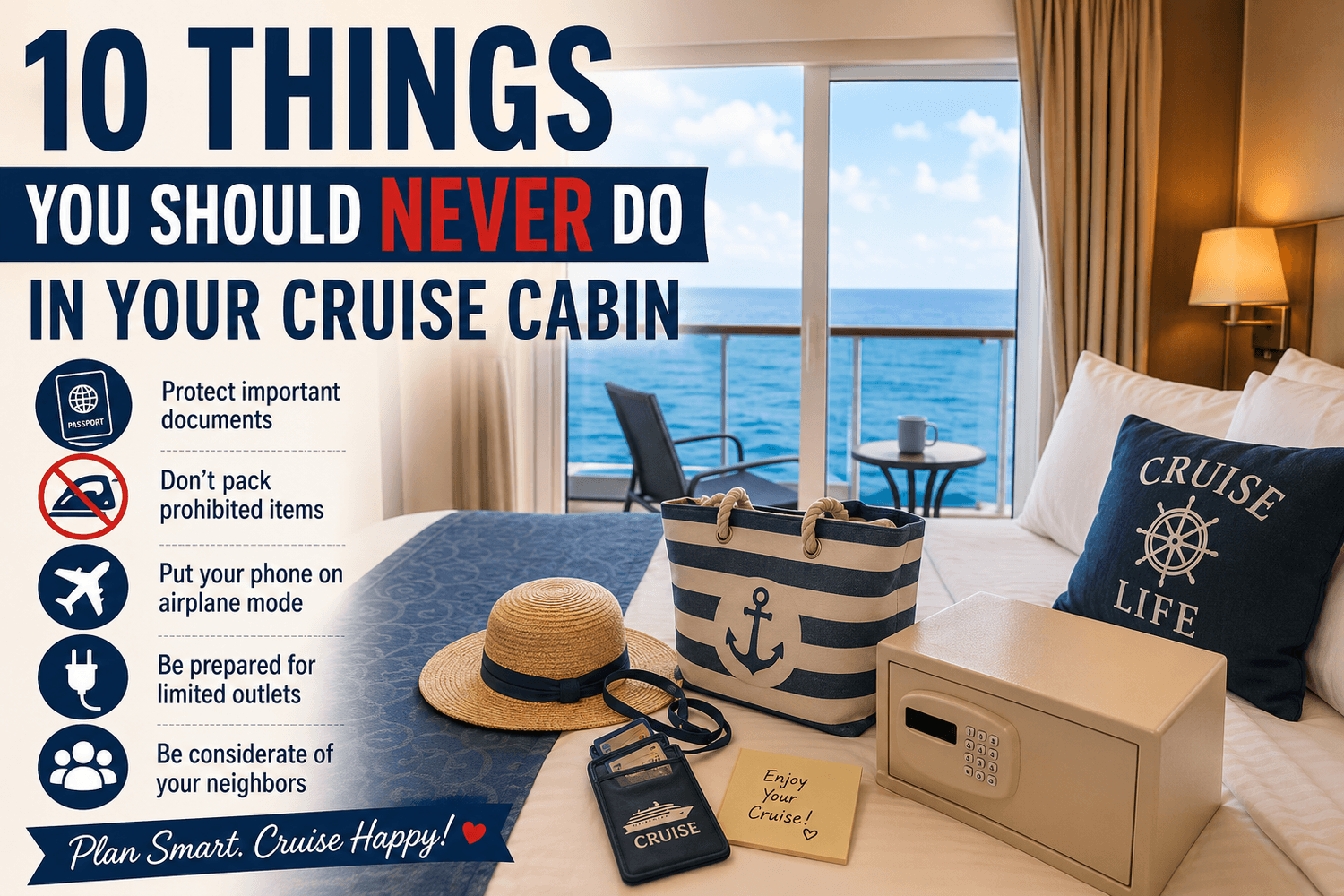
Your cruise cabin is your home away from home while you're sailing. It's where you'll sleep, get ready for dinner, recharge your devices, and relax after a long day exploring ports.
But even experienced cruisers can make mistakes that turn a comfortable cabin into a source of frustration.
Some mistakes are minor inconveniences. Others can lead to unexpected charges, confiscated belongings, safety concerns, or unhappy neighbors.
The good news? Most are easy to avoid once you know what to watch for.
This article contains affiliate links. We may earn a commission at no additional cost to you.
Here are 10 things you should never do in your cruise cabin, along with practical tips to make your next sailing more comfortable.
Ready to plan your next cruise?
👉 Compare cruise prices, itineraries, and special offers on CruiseDirect before booking your cabin.
1. Never Leave Important Documents and Valuables Lying Around
Your cruise cabin may feel like a private hotel room, but that doesn't mean you should leave passports, credit cards, cash, jewelry, or other valuables scattered across the desk.
Most cruise cabins have a small safe where you can store important belongings when you're not using them.
Before unpacking, choose a secure place for your passport, travel documents, and valuables.
A few additional precautions can help:
Keep digital copies of important travel documents in a secure location.
Avoid leaving cash and credit cards in plain sight.
Store expensive jewelry and electronics securely when they're not in use.
Check the cabin safe before disembarking.
Remember that you may need your cruise card and identification when going ashore, depending on the port and cruise line.
Cruise tip: Don't automatically carry your passport into every port. Follow your cruise line's instructions and the entry requirements for your destinations.
2. Never Bring Prohibited Appliances Into Your Cabin
Cruise lines have strict rules about electrical appliances because certain items can create fire hazards.
Depending on the cruise line, prohibited items may include:
Clothes irons and ironing boards
Clothing steamers
Hot plates and other cooking appliances
Candles and open-flame devices
Certain extension cords, power strips, and electrical accessories
And yes, I learned this lesson firsthand!
On one of our cruises, I packed a clothing steamer without realizing it wasn't permitted.
At some point after we boarded, our cabin steward removed it from our cabin.
The funny part? I didn't even notice it was missing until I needed it later in the cruise!
Fortunately, it wasn't a major problem, but it certainly taught me to check the rules before packing.
Cruise lines don't all have identical restrictions, and an item permitted by one company may be prohibited by another.
Cruise tip: Always review your cruise line's current prohibited-items list before sailing. Don't assume that an appliance is allowed simply because it's small or designed for travel.
For more packing advice, see What to Pack for Your First Cruise.
3. Never Forget to Put Your Phone in Airplane Mode
This is one mistake that can become surprisingly expensive.
When your cruise ship sails away from port, your phone may connect to a maritime cellular network instead of your regular carrier's network.
These cellular-at-sea services can result in expensive roaming charges, particularly if your phone uses mobile data in the background.
And here's something important:
Purchasing a cruise ship Wi-Fi package does not automatically prevent cellular roaming charges.
To help avoid unwanted charges:
Turn on airplane mode before leaving port.
Manually turn Wi-Fi back on if you want to use the ship's internet service.
Keep cellular connectivity disabled while using shipboard Wi-Fi.
Check your wireless carrier's international and maritime roaming policies.
Use Wi-Fi calling only when your carrier and cruise line support it, and verify any applicable charges.
If you're planning to use your phone ashore, research your international roaming options before departure.
Cruise tip: An international travel plan or eSIM may help with connectivity in certain ports, but it generally doesn't cover maritime cellular networks while you're at sea.
👉 Read our complete guide: How to Use Your Phone on a Cruise Without Getting Hit With Roaming Charges.
4. Never Leave Wet Towels and Swimsuits Everywhere
Cruise cabins are usually smaller than traditional hotel rooms, and clutter builds up quickly.
Wet towels thrown over chairs, damp swimsuits left on the bed, and clothing scattered around the bathroom can make a small cabin feel uncomfortable.
They can also create unpleasant odors when items don't dry properly.
Instead:
Use the bathroom clothesline if your cabin has one.
Hang damp clothing on designated hooks.
Keep wet items away from electronics and upholstered furniture.
Reuse or exchange towels according to your cruise line's procedures.
And one more thing: Don't hang towels or swimsuits over your balcony railing.
Wind can carry them away, and many cruise lines prohibit leaving belongings on balcony railings.
A little organization makes a surprisingly big difference in a small space.
5. Never Assume Your Cabin Has Plenty of Electrical Outlets
Think about how many devices you travel with.
Between phones, tablets, smartwatches, cameras, e-readers, and other electronics, it's easy to run out of places to charge everything.
Some older cruise ships have relatively few outlets, although newer ships often provide more USB ports and charging options.
Before packing a charging hub or adapter, check your cruise line's rules.
Certain power strips, extension cords, surge protectors, and multi-outlet devices may be prohibited.
Cruise tip: Bring the charging cables you actually need and consider charging devices at different times rather than trying to plug everything in at once.
Never overload an outlet or use damaged charging equipment.
6. Never Ignore Your Cabin's Safety Information
When you first board a cruise ship, it's tempting to drop your bags and immediately head to the buffet.
But before getting too comfortable, take a few minutes to familiarize yourself with the ship's emergency procedures.
You should know:
Where your assigned muster station is located.
How to reach it from your cabin.
Where your life jackets are stored, if applicable.
How to contact guest services or report an emergency.
Where the nearest emergency exits and stairways are located.
Cruise lines have different muster-drill procedures, so follow the instructions provided for your particular sailing.
Don't assume that because you've cruised before, the procedures will be identical on your next ship.
Cruise tip: Review the emergency information posted in your cabin and complete all required safety instructions before the deadline.
It's information you hope you'll never need, but it's worth knowing.
7. Never Let Your Cabin Door Slam
This may sound like a small thing, but it can drive your neighbors crazy!
Cruise cabin doors are often heavy, and they can close with a surprisingly loud bang.
When passengers repeatedly allow their doors to slam, the noise can disturb people in nearby cabins, particularly early in the morning or late at night.
The solution is simple.
Hold the door as it closes rather than letting it swing shut.
And if you're returning to your cabin after a late-night show or a few cocktails, remember that some of your neighbors may already be asleep.
Cruise tip: Never prop open a cabin door or interfere with its closing mechanism. These doors serve an important safety purpose.
A little consideration goes a long way toward keeping everyone happy.
8. Never Leave Valuables or Loose Belongings on Your Balcony
There's nothing quite like stepping onto your private balcony with a cup of coffee and watching the ocean roll by.
But your balcony isn't a safe storage area.
Phones, tablets, books, jewelry, wallets, and other personal belongings can be exposed to rain, sea spray, and strong winds.
Even lightweight items you think are secure can blow away.
Avoid leaving belongings unattended outside, especially overnight or when the ship is underway.
Also, never throw anything from your balcony or allow loose objects to blow overboard.
Cruise tip: Bring your personal belongings inside when you're finished enjoying the balcony, and always follow your cruise line's balcony safety rules.
The ocean view is wonderful. Losing your phone over the railing? Not so much!
9. Never Ignore the Storage Space Already in Your Cabin
One of the easiest ways to make a small cruise cabin feel even smaller is to live out of your suitcase for the entire trip.
Many cabins have more storage than you might initially realize.
Look for:
Closet shelves and hanging space
Drawers and bedside storage
Bathroom shelves
Space beneath the bed for luggage
Additional storage compartments, depending on the ship
Unpacking your clothes and putting your suitcases away can make the cabin feel more spacious almost immediately.
Keeping frequently used items in the same place also saves time when you're getting ready for dinner or heading ashore.
Cruise tip: Pack a small carry-on with medications, important documents, valuables, and anything you'll need before your checked luggage arrives.
👉 Read What I Always Pack in My Carry-On for a Cruise.
10. Never Forget That You're Sharing Walls With Other Passengers
Your cabin may feel like your own little retreat, but remember that other passengers are sleeping, relaxing, and getting ready for their day just a few feet away.
Cruise ship walls and connecting doors don't always block as much noise as you might expect.
Loud conversations, televisions, music, and late-night activity can disturb neighboring cabins.
A few simple habits help:
Keep television and music volume reasonable.
Avoid shouting across the cabin or balcony.
Speak quietly in the hallways late at night.
Be considerate when moving furniture or opening and closing doors.
Respect quiet hours and shipboard policies.
And yes, that includes conversations on your balcony!
You may think you're speaking privately, but neighboring passengers can sometimes hear every word.
Cruise tip: If excessive noise becomes a persistent problem, contact guest services rather than confronting other passengers.
Everyone deserves a peaceful place to relax after a busy day at sea.
Final Thoughts: A Little Cabin Courtesy Goes a Long Way
Your cruise cabin doesn't have to be enormous to be comfortable.
In fact, some of our favorite cruise memories have come from relaxing in our cabin after a wonderful day exploring a new destination.
The secret is knowing how to make the most of the space while avoiding a few common mistakes.
Secure your valuables, follow electrical safety rules, protect yourself from unexpected roaming charges, and be considerate of your neighbors.
And don't forget to check your cruise line's policies before packing something you're unsure about. Take it from someone who once had a clothing steamer disappear from her cabin!
A little preparation can save you unnecessary headaches and leave you with more time to enjoy the vacation you came for.
Planning your next cruise?
👉 Compare cruise prices, itineraries, and available offers on CruiseDirect.
Related Articles
Affiliate Disclosure: This article may contain affiliate links. If you make a purchase, book a cruise, or book a travel-related service through these links, I may earn a commission at no additional cost to you. As an Amazon Associate, I earn from qualifying purchases. Thank you for supporting Cruising Style.
Home | About | Contact | Privacy Policy | Terms of Service | Affiliate Disclosure