Cruise Port Safety: How to
Protect Yourself and Your Belongings Ashore
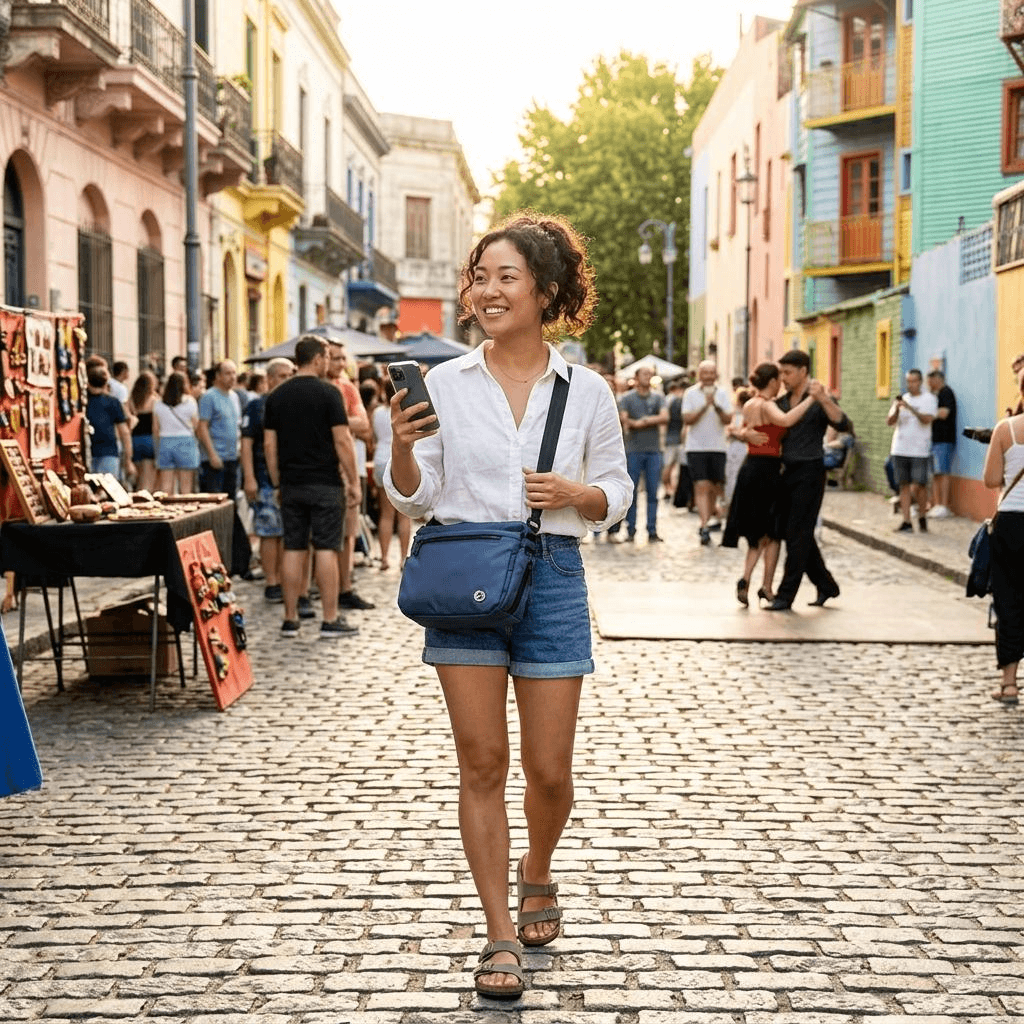
One of the things I love
about cruising is being able to wake up in a completely different destination and spend the day exploring somewhere new.
I've generally felt very safe while cruising.
But there's an important distinction between feeling safe on the ship and assuming you're completely safe once you step ashore.
Cruise passengers can be easy to recognize. We're often carrying phones, cameras, purses, credit cards, and spending money. We may also be distracted because we're looking at maps, taking pictures, or simply trying to figure out where we're going.
That can make travelers attractive targets for pickpockets and opportunistic thieves.
This isn't about being afraid to explore. Keeping your belongings secure and staying aware of your surroundings is good advice wherever you are—whether you're exploring a cruise port halfway around the world or spending the day in a busy area close to home.
The goal is simple: be aware, not afraid.
Unfortunately, I've seen firsthand just how quickly something can happen.
I Watched a Necklace Get Snatched in Seconds
During a trip to Brazil, my husband, Val, and I were visiting family in Rio de Janeiro.
We were walking on the sidewalk at Copacabana Beach in broad daylight when a thief suddenly grabbed a necklace from Val's cousin's neck.
I was standing right beside her.
The necklace wasn't expensive. It was costume jewelry, but it meant something to her.
And the whole thing happened incredibly fast.
The thief wasn't working alone. Someone else was waiting nearby on a motorcycle. He grabbed the necklace, jumped onto the back of the bike, and within seconds they were gone.
There was virtually no opportunity to react.
What makes the experience even more striking is that Val's cousin is Brazilian. She wasn't an inexperienced tourist wandering around somewhere unfamiliar.
It reinforced something I think every traveler should remember:
You don't have to be walking down a dark alley at midnight for a theft to happen.
We were in a famous tourist area, on a sidewalk, in broad daylight.
Don't Fight Someone Over Your Belongings
One of the warnings we've been given while traveling is not to physically fight someone who is trying to steal something from you.
A phone, necklace, wallet, or purse can be replaced.
You can't know whether the person confronting you has a weapon or how far they're willing to go.
If someone uses force or threatens you, protecting yourself is more important than protecting your belongings.
Get somewhere safe and contact local authorities or emergency services as soon as you can.
The better strategy is to make yourself a less appealing target in the first place.
Leave the Expensive-Looking Jewelry Behind
It's tempting to dress up while you're on vacation, especially when you're visiting somewhere you've dreamed about seeing.
But expensive—or even expensive-looking—jewelry can attract attention you don't want.
The necklace stolen in Brazil wasn't valuable. The thief couldn't possibly have known that before grabbing it.
That's the point.
A thief doesn't necessarily know whether your necklace, watch, earrings, or bracelet cost $20 or $2,000.
When I'm exploring a port, I'd rather keep things simple.
Save the dressier jewelry for dinner aboard the ship.
Don't Advertise That You're Carrying Valuables
This doesn't mean you need to look sloppy when you travel.
It means thinking about what your appearance may communicate.
Designer bags, expensive watches, flashy jewelry, a phone constantly held in your hand, or a wallet pulled out repeatedly can make it obvious that you're carrying things worth stealing.
In many cruise destinations, you're not going to fool anyone into thinking you're a local anyway. Thousands of passengers may have just walked off a cruise ship.
The goal isn't necessarily to avoid looking like a tourist.
It's to avoid looking like an easy or especially profitable target.
You also don't need to carry everything you brought on the cruise with you.
Take what you actually need for the day and leave unnecessary valuables secured aboard the ship.
Your Phone Is One of Your Most Valuable Travel Items
Phones are particularly attractive targets because they're valuable, portable, and incredibly easy to grab.
But losing your phone while traveling can cause problems far beyond the cost of replacing it.
Think about what's on there:
Email
Photos
Banking and payment apps
Cruise information
Airline information
Hotel reservations
Maps and directions
Contacts
Tickets and reservations
Travel confirmations
That's why your phone should always have a secure screen lock.
A strong PIN or password—and biometric security such as fingerprint or facial recognition when available—adds an important layer of protection if your phone is stolen.
Avoid easily guessed PINs or simple passwords.
Before traveling, it's also smart to make sure your phone is backed up and that you know how to remotely locate, lock, or erase it if it disappears.
Be Careful Using Your Phone Near Streets and Open Car Windows
It's incredibly easy to become absorbed in your phone when you're trying to follow directions, take pictures, or look something up.
Pay attention to what's happening around you before pulling it out.
And don't assume you're completely protected because you're sitting inside a vehicle.
An open car window can provide an opportunity for someone outside to reach in and grab a phone, purse, or other belongings before you have time to react.
Keep valuables away from open windows and doors, particularly when a vehicle is stopped or moving slowly in a crowded area.
When you don't need your phone, put it somewhere secure instead of leaving it sitting in your hand.
Consider a Wrist or Crossbody Phone Strap
One warning we heard frequently while traveling in Brazil was to be particularly aware of your phone when using it in public.
When you're taking pictures, checking directions, or looking something up, it's easy to become focused on the screen instead of what's happening around you. A phone can be grabbed from your hand in seconds.
I use a wrist strap on my phone when I travel, and I also have a crossbody phone strap. Both keep your phone physically attached to you while you're using it. They don't replace being aware of your surroundings, but they can add another layer of protection against a quick grab.
👉 View Wrist & Crossbody Phone Straps on Amazon
Pay Attention to Your Surroundings
Sometimes it's the little things you don't normally think about.
At Copacabana Beach, there's a wide pedestrian sidewalk alongside a dedicated lane for bicycles and other fast-moving traffic. We walked there without any problems, but it made me think more carefully about where I'm carrying my belongings.
If you're walking beside a street, bike lane, or other area with passing traffic, try to keep your phone and bag on the side of your body away from that traffic, particularly when you're using your phone.
During our time in Copacabana, I carried a crossbody bag, kept my phone inside it when I wasn't using it, and wasn't wearing flashy jewelry. Those are simple precautions I would use in any busy tourist area.
Travel safety isn't about expecting something bad to happen. It's about making small choices that reduce the opportunity for something to happen.
Keep Your Money and Cards Close to Your Body
A traditional purse or wallet isn't always the best choice when you're walking through a crowded tourist area.
This is where concealed travel accessories can be genuinely useful.
Hidden-Pocket Travel Scarf
A travel scarf with a concealed zippered pocket provides a discreet place for small essentials such as a card, cash, or other items you want to keep close.
Unlike an obvious purse or wallet, the storage pocket isn't immediately visible.
It can be particularly useful when you don't want to carry a larger bag but still want a secure place for a few essentials.
👉 View Hidden-Pocket Travel Scarves on Amazon
Travel Money Belt
A money belt worn underneath your clothing provides another concealed place for emergency cash, cards, identification, or other important items.
I wouldn't use it as a wallet that you're constantly reaching into throughout the day.
The real benefit is having important backup items hidden and close to your body.
👉 View Travel Money Belts on Amazon
If You Carry a Crossbody Bag, Wear It Intentionally
Crossbody bags can be a good option because they're harder to simply leave behind or grab from your hand.
But wearing one doesn't automatically make your belongings secure.
Keep the bag:
Across your body rather than hanging from one shoulder
Positioned toward the front of your body in crowded areas
Zipped or securely closed
Close to you rather than dangling behind you
Don't put your phone or wallet into an open exterior pocket simply because it's convenient.
Convenient for you can also mean convenient for a pickpocket.
If you're buying a bag specifically for travel, features such as secure zippers and sturdy straps can also be worth considering.
👉 View Crossbody Travel Bags on Amazon
Crowds Require Extra Attention
Busy tourist attractions, public transportation, markets, festivals, and crowded streets create plenty of distractions.
Someone bumps into you.
Someone asks you a question.
Someone creates a commotion.
Meanwhile, another person may be paying attention to your purse or pocket.
The theft we witnessed in Brazil involved two people working together. That alone taught me never to assume a thief is necessarily acting alone.
Stay aware of what's happening around you without becoming so worried that you can't enjoy your destination.
Carry Only the Cash You Need
There's rarely a reason to walk around a cruise port carrying a large amount of cash.
Take enough for your plans plus a reasonable backup.
If you carry additional emergency cash or another credit card, consider keeping it separate from your primary wallet.
For example, you might keep your spending money somewhere accessible while keeping a backup card and emergency cash concealed elsewhere.
That way, losing one wallet doesn't necessarily leave you with nothing.
Protect Your Passport
Whether you should carry your original passport ashore can depend on your destination, itinerary, cruise line instructions, and local requirements.
Don't automatically leave it aboard or automatically carry it without checking.
Before going ashore, verify what documentation is required for that particular port.
If you're carrying your passport, treat it as one of your most important possessions and keep it securely concealed.
An RFID-blocking passport protector can also help keep your passport protected and organized while you're traveling.
👉 View RFID Passport Protectors on Amazon
For more information about the documents you may need before your cruise, read Cruise Documents:
Cruise Documents: Don't Let Paperwork Delay Your Vacation
Don't Let Safety Concerns Ruin Your Day
I don't want this article to make anyone afraid to explore cruise ports.
I've visited many destinations and had wonderful experiences.
The same precautions we're talking about here make sense anywhere you travel. Keeping your belongings secure and paying attention to your surroundings doesn't mean you should be afraid. It simply means being aware.
Pay attention.
Don't flash valuables.
Secure your phone.
Keep your money and cards close.
Be particularly aware in crowded tourist areas.
And if something doesn't feel right, move away.
A little preparation can go a long way toward keeping an incredible day in port from becoming memorable for all the wrong reasons.
Final Thoughts
I'll never forget watching that necklace disappear in seconds on Copacabana Beach.
What stayed with me wasn't the value of the necklace.
It was how fast it happened.
There was no long confrontation and virtually no warning. One moment it was there, and seconds later the thieves were gone.
Cruising gives us an incredible opportunity to experience destinations all over the world. I don't believe we should be frightened of those places.
But I do believe we should travel smart.
Keep valuables discreet, protect your phone, secure your money and cards, pay attention to your surroundings, and remember that your personal safety will always matter more than anything you're carrying.
Be aware, not afraid—and enjoy every opportunity you have to explore somewhere new.
You May Also Enjoy
🚢 Cruise Documents: Don't Let Paperwork Delay Your Vacation
🚢 First-Time Cruiser Tips: What I Wish I Knew Before My First Cruise
🚢 Embarkation Day Tips: What to Expect When You Arrive at the Port
🚢 What Not to Bring on a Cruise: Common Items That May Be Confiscated
Affiliate Disclosure: This article may contain affiliate links. If you make a purchase, book a cruise, or book a travel-related service through these links, I may earn a commission at no additional cost to you. As an Amazon Associate, I earn from qualifying purchases. Thank you for supporting Cruising Style.
Home | About | Contact | Privacy Policy | Terms of Service | Affiliate Disclosure