Cruise Ship Dining
Explained: What’s Free and What Costs Extra?
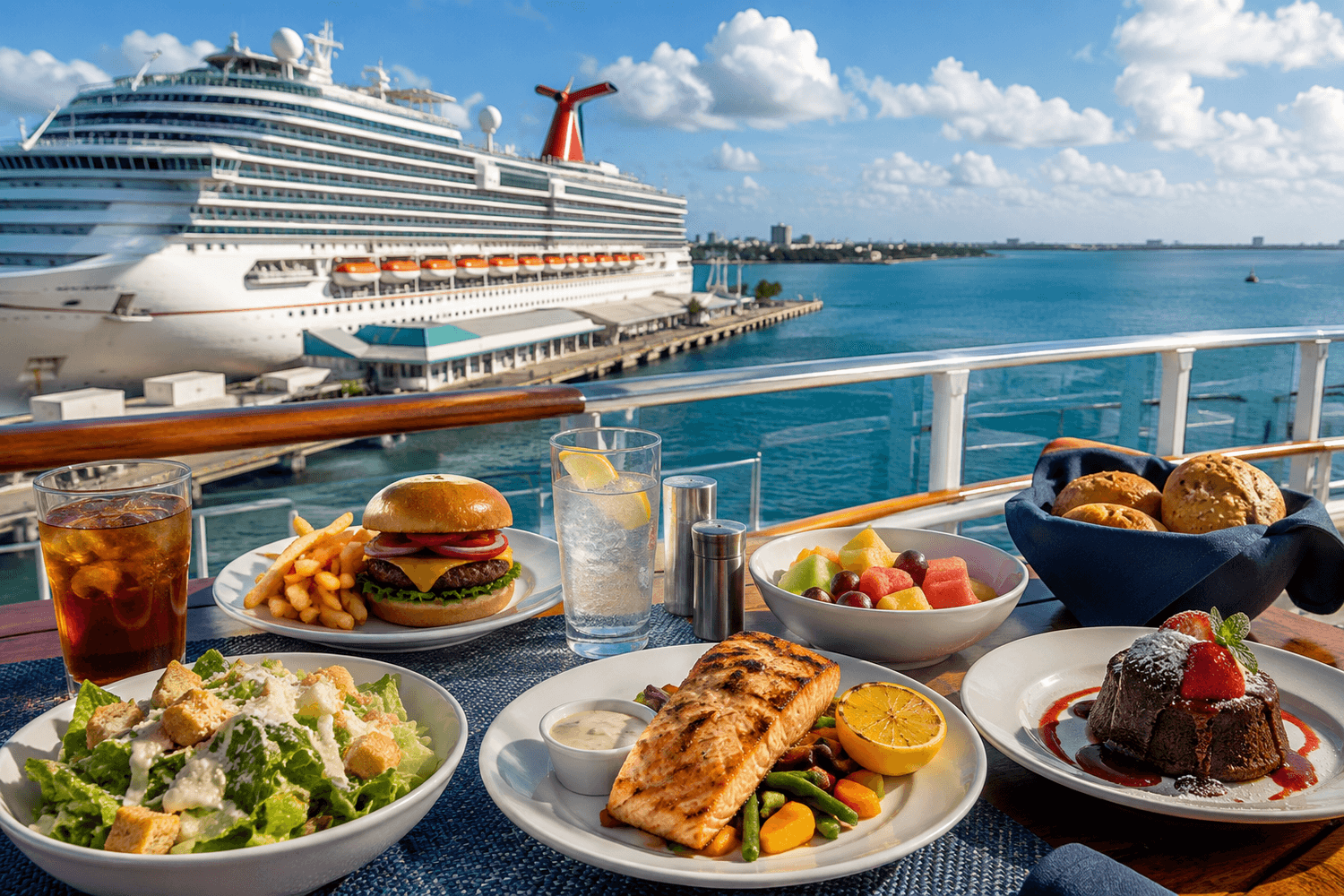
One of the best things about taking a cruise is knowing you are definitely not going to go hungry.
Breakfast before heading into port. Lunch by the pool. Dinner in the main dining room. Pizza at 11:00 at night because apparently vacation calories don't count.
There is food everywhere.
But if you're taking your first cruise, there is one part that can be surprisingly confusing:
Which food is actually included in your cruise fare—and which restaurants are going to cost you extra?
The answer isn't quite as simple as “food is included.”
Most mainstream cruise fares include enough dining options that you could eat very well for your entire vacation without spending another dollar on food. Main dining rooms, buffets and at least some casual restaurants are generally included, although exactly what you get varies by cruise line and ship. For example, Royal Caribbean currently includes its Main Dining Room, Windjammer buffet and a number of casual venues, while Carnival similarly includes its main dining rooms, buffet and several casual options.
At the same time, today's cruise ships are packed with specialty restaurants, steakhouses, sushi restaurants, coffee shops, dessert venues and other tempting places that can add quite a bit to your onboard bill.
So let's sort out what's free, what isn't and when paying extra for food on a cruise is actually worth it.
Is Food Included in the Price of a Cruise?
Yes. A substantial amount of food is included in most cruise fares.
You do not need to purchase a dining package just to eat onboard.
In fact, if you're trying to keep your vacation costs under control, you can absolutely take a cruise and eat exclusively at complimentary dining venues.
Most mainstream cruise ships include some combination of:
Main dining room meals
Buffet meals
Casual restaurants
Pizza
Burgers or other poolside food
Snacks and desserts
Basic coffee, tea and certain nonalcoholic beverages
Exactly what's included varies by cruise line—and sometimes even between ships operated by the same cruise line—so always check the dining information for your particular sailing.
Royal Caribbean, for example, currently lists its Main Dining Room and Windjammer as complimentary across the fleet, with additional included venues varying by ship.
Ready to compare cruise prices?
👉 Browse current cruise deals, itineraries, and cabin options with CruiseDirect before you book.
The Main Dining Room Is Usually Included
For many cruisers, the main dining room, often shortened to MDR, is where they'll have dinner most nights.
And yes—the meal itself is generally included in your cruise fare.
Unlike the buffet, the main dining room is a traditional sit-down restaurant. You'll be seated at a table, order from a menu and have servers bring your courses.
Depending on the cruise line, dinner might include:
Appetizers
Soups and salads
Entrées
Desserts
Basic beverages
Menus usually change throughout the cruise, so you aren't necessarily choosing from the exact same dishes every night.
Royal Caribbean, for example, currently describes its Main Dining Room as complimentary multi-course dining with rotating menus.
Some cruise lines also open their main dining rooms for breakfast and lunch on certain days.
Can You Order More Than One Entrée?
Often, yes—but don't assume that absolutely everything is unlimited.
Traditionally, cruise dining has been very generous about allowing passengers to order an additional appetizer, entrée or dessert.
However, cruise lines can change their policies, and certain premium items may carry an additional charge.
You may even see something such as lobster or a premium steak available on the main dining room menu for an extra fee, despite the restaurant itself being complimentary.
So if there's a price printed beside an item, that particular item isn't included.
The Cruise Buffet Is Included
The buffet is another major complimentary dining option on most mainstream cruise ships.
This is where you'll usually find the greatest variety in one place.
Breakfast might include eggs, bacon, sausage, fruit, pastries, cereal, pancakes and made-to-order stations.
Lunch and dinner can include salads, sandwiches, carved meats, pasta, international dishes, desserts and plenty of familiar comfort food.
Buffets are especially convenient when:
You don't want a long sit-down meal.
Everyone in your group wants something different.
You have children or picky eaters.
You're trying to eat quickly before an excursion or activity.
You simply don't feel like dressing for dinner.
And no, you don't pay every time you go through the buffet.
If you're hungry again two hours later, you can go back.
It's a cruise. Nobody is standing at the buffet entrance counting your dinner rolls.
What About Pizza, Burgers and Other Casual Food?
This is where you have to pay a little more attention.
Many ships have casual restaurants that are completely complimentary.
You may find included pizza, tacos, burgers, sandwiches, hot dogs, salads or grab-and-go snacks.
For example, Royal Caribbean lists several casual venues among its complimentary offerings, although availability varies by ship. Carnival also lists several casual food options as included in its cruise fare.
But another restaurant serving similar food on the same ship might charge.
Never assume a restaurant is complimentary simply because it's casual.
Before ordering, look at the cruise line's app, daily planner or restaurant information.
Complimentary venues are normally clearly identified.
What Is Specialty Dining?
Specialty dining is the major category of cruise food that usually costs extra.
These restaurants are designed to provide something beyond the standard included dining experience.
Depending on your ship, specialty dining might include:
Steakhouses
Italian restaurants
Sushi
Teppanyaki or hibachi
Seafood restaurants
French cuisine
Chef's-table experiences
Upscale tasting menus
Interactive or themed dining
Specialty restaurants may charge a fixed cover price or price individual menu items à la carte.
Some cruise lines also sell dining packages covering multiple specialty meals.
Is Specialty Dining Better Than the Included Food?
Not necessarily.
It's usually different.
Specialty restaurants may offer more elaborate menus, smaller dining rooms, premium ingredients or a more intimate atmosphere.
But that doesn't mean you need them to have a great vacation.
I've been on plenty of cruises, and I would never tell a first-time cruiser that they need to spend hundreds of extra dollars on specialty dining just because it's available.
Your cruise fare already includes food.
Try the included restaurants before deciding they aren't good enough.
Are Specialty Dining Packages Worth It?
They can be—but only if you actually want to eat at several specialty restaurants.
Cruise lines often sell packages that bundle several specialty meals together at a lower overall price than purchasing each restaurant separately.
That can make sense if you're a foodie, celebrating something special or already know you want several premium dining experiences.
But don't buy a package simply because the cruise line makes it sound like something everyone needs.
Ask yourself:
Would I have paid for these restaurants individually if there were no package?
If the answer is no, you're not necessarily saving money by buying the package.
You're just spending money on something you weren't planning to buy.
What About Room Service?
This is one of those areas where cruise policies vary considerably.
Do not assume room service is completely free.
Some cruise lines include certain breakfast items but charge for other room-service orders.
Others charge a delivery or service fee, and premium menu items may cost extra.
Carnival, for example, currently says continental breakfast room service is complimentary while charges apply to its other 24-hour room-service offerings.
So before you order that midnight cheeseburger from bed, check your cruise line's current policy.
And remember: a room-service delivery charge is different from a gratuity. Check whether gratuity is included or automatically added before deciding what additional tip you want to leave.
Coffee Can Be Free—or Cost Extra
This one catches people.
Regular coffee is generally available somewhere onboard without an additional charge.
But that does not mean every cup of coffee on the ship is complimentary.
Specialty coffee drinks such as lattes, cappuccinos and branded coffee-shop beverages may cost extra.
Royal Caribbean, for example, provides complimentary regular coffee at multiple locations but charges for Starbucks products.
So your morning cup of coffee doesn't necessarily require a beverage package.
Your giant caramel-whatever-with-extra-whipped-cream might. 😂
What About Soda, Alcohol and Other Drinks?
Food and beverages are treated differently on cruises.
Most mainstream fares include some basic beverages such as water, tea, regular coffee and certain juices or lemonade, although the exact selection varies.
Soda, bottled water, specialty coffee, alcoholic beverages and other premium drinks may cost extra unless they're included in your fare or you've purchased a beverage package.
That's why it's important not to confuse “meals included” with “everything I drink is included.”
A passenger could spend absolutely nothing extra on food and still rack up a substantial beverage bill.
Are Desserts and Ice Cream Free?
Some are. Some aren't.
Dessert in the main dining room? Usually included.
Desserts at the buffet? Usually included.
Soft-serve ice cream on many ships? Often included.
But that gorgeous specialty cupcake, gelato, milkshake or elaborate dessert you spotted in a dedicated shop may carry an additional charge.
This is another reason I recommend checking the cruise line's app before ordering if you aren't sure.
A price on the menu is a pretty good clue. 😂
Can You Eat as Much as You Want?
For the most part, cruise dining is remarkably generous.
You can have breakfast, lunch, dinner and snacks throughout the day without being limited to three meals.
Want breakfast at the buffet and then decide you'd like something else later?
Fine.
Lunch followed by pizza in the afternoon?
Fine.
Dinner followed by a late-night snack?
Also fine.
You don't have to “save” your included meals for later.
However, that doesn't mean every restaurant is open 24 hours or that every premium menu item is unlimited. Venue hours and policies vary.
What If You Have Food Allergies or Dietary Restrictions?
Cruise lines routinely accommodate many dietary needs, but don't wait until you're sitting at dinner on the first night to mention a serious food allergy.
If you have allergies or significant dietary requirements, notify the cruise line before sailing according to its procedures and speak with the dining staff once onboard.
Ships commonly accommodate needs such as:
Vegetarian diets
Vegan diets
Gluten-free diets
Food allergies
Low-sodium requests
Other medically necessary dietary restrictions
Options and procedures vary by cruise line, so contact your cruise line before departure if your dietary needs are significant.
Royal Caribbean, for example, says its complimentary dining includes vegetarian, gluten-free and kid-friendly selections and notes that staff can assist guests with dietary restrictions.
What About Kids?
Children generally have plenty of complimentary food choices.
Main dining rooms commonly offer kid-friendly menus, while buffets make it easy for children to choose familiar foods.
Pizza, burgers, fruit, cereal and other casual options are also common.
And don't assume you need specialty dining simply because you're traveling with children.
There is usually more than enough included food to keep them fed.
Whether they'll actually eat what you put in front of them is between you and the child. 😂
Do You Need Dinner Reservations?
That depends on the restaurant and cruise line.
The main dining room may use:
Traditional assigned dining times
Flexible or anytime dining
Reservations
A combination of these systems
Specialty restaurants are different.
I strongly recommend reserving any specialty restaurant you really care about, particularly on popular ships or for prime dinner times.
Royal Caribbean, for example, recommends reservations for specialty dining, while its main dining room offers both set and flexible dining arrangements.
If you're celebrating a birthday, anniversary or another special occasion, don't wait until the last night of the cruise and hope your preferred restaurant has an opening.
How Much Extra Should You Budget for Cruise Dining?
Potentially nothing.
That's the part first-time cruisers sometimes miss.
You could board the ship, eat at complimentary restaurants for the entire cruise and spend $0 extra on specialty food.
Or you could book multiple specialty restaurants, order room service, visit premium coffee shops, buy desserts and turn dining into a significant additional vacation expense.
Neither approach is wrong.
The key is knowing which experience you're choosing before the charges start appearing on your onboard account.
If you're trying to cruise on a budget, complimentary dining is one of the easiest ways to control your spending without feeling as though you're depriving yourself.
Should First-Time Cruisers Try Specialty Dining?
I wouldn't make it your first priority.
If this is your first cruise, experience the main dining room. Try the buffet. Check out the included casual restaurants.
You've already paid for them.
If one specialty restaurant really appeals to you—or you're celebrating something—book it and enjoy it.
But you don't need to spend every night in a specialty restaurant to have a good dining experience.
Personally, I think a nice middle ground for many cruisers is:
Enjoy the complimentary dining and choose one specialty restaurant that genuinely interests you.
That gives you the experience without turning food into another major line item in your vacation budget.
How to Tell Whether a Restaurant Is Free Before You Order
This is much easier than trying to memorize every restaurant on every cruise line.
Before your cruise, look at your ship's dining section on the cruise line's website or app.
Once onboard, check the app or daily information for each venue.
Look for terms such as:
Complimentary or Included
You're generally good to go.
Specialty Dining, Cover Charge or menu prices
Expect an additional cost.
And if you're still unsure?
Ask.
There is absolutely nothing embarrassing about saying:
“Is this restaurant included in my cruise fare?”
I'd rather ask a ten-second question than discover a $100 surprise on my onboard account.
Frequently Asked Questions
Is all food free on a cruise?
No. Most mainstream cruises include substantial complimentary dining, but specialty restaurants, premium menu items and certain snacks or dining experiences can cost extra.
Is the buffet free on a cruise?
On mainstream cruise lines, the primary buffet is generally included in your cruise fare.
Is the main dining room free?
The standard main dining room is generally included. However, certain premium menu selections may carry an additional charge.
Do I have to buy a dining package?
No. You can eat at complimentary venues throughout your cruise without purchasing a specialty dining package.
Is room service free?
Sometimes, but not always. Policies vary by cruise line, meal and menu item. Check the current policy for your particular sailing.
Is pizza free on a cruise?
Often, but not universally. Many cruise ships offer complimentary pizza, while certain venues or delivery options may charge.
Can I eat more than three meals a day?
Absolutely. Complimentary dining is available at various times throughout the day, although individual venues have their own operating hours.
Is specialty dining worth it?
It can be if you enjoy premium restaurants or want a special experience. But it is completely optional, and plenty of cruisers are happy eating only at included venues.
Final Thoughts
One of the reasons cruising can offer such good vacation value is that you really can eat very well without continually pulling out your wallet.
Your cruise fare typically gives you access to a main dining room, buffet and additional complimentary food options.
Everything beyond that is a choice.
Want steakhouse night?
Go for it.
Want sushi?
Have at it.
Want to spend the entire week eating food you've already paid for?
There is absolutely nothing wrong with that.
The trick isn't avoiding every extra charge.
It's knowing what's included before you spend money on something you didn't realize was optional.
And whatever you do, don't spend your entire cruise worrying about whether you're “doing dining right.”
Eat what you like.
Try something new.
And if you want dessert after lunch and another dessert after dinner?
You're on a cruise.
I won't tell anybody. 😂
Ready to compare cruise prices?
👉 Browse current cruise deals, itineraries, and cabin options with CruiseDirect before you book.
👉 Browse top-rated tours and experiences on Viator and make the most of your time in port.
Related Articles
Affiliate Disclosure: This article may contain affiliate links. If you make a purchase, book a cruise, or book a travel-related service through these links, I may earn a commission at no additional cost to you. As an Amazon Associate, I earn from qualifying purchases. Thank you for supporting Cruising Style.
Home | About | Contact | Privacy Policy | Terms of Service | Affiliate Disclosure