Cruise Ship Terms Every First-Time Cruiser Should Know
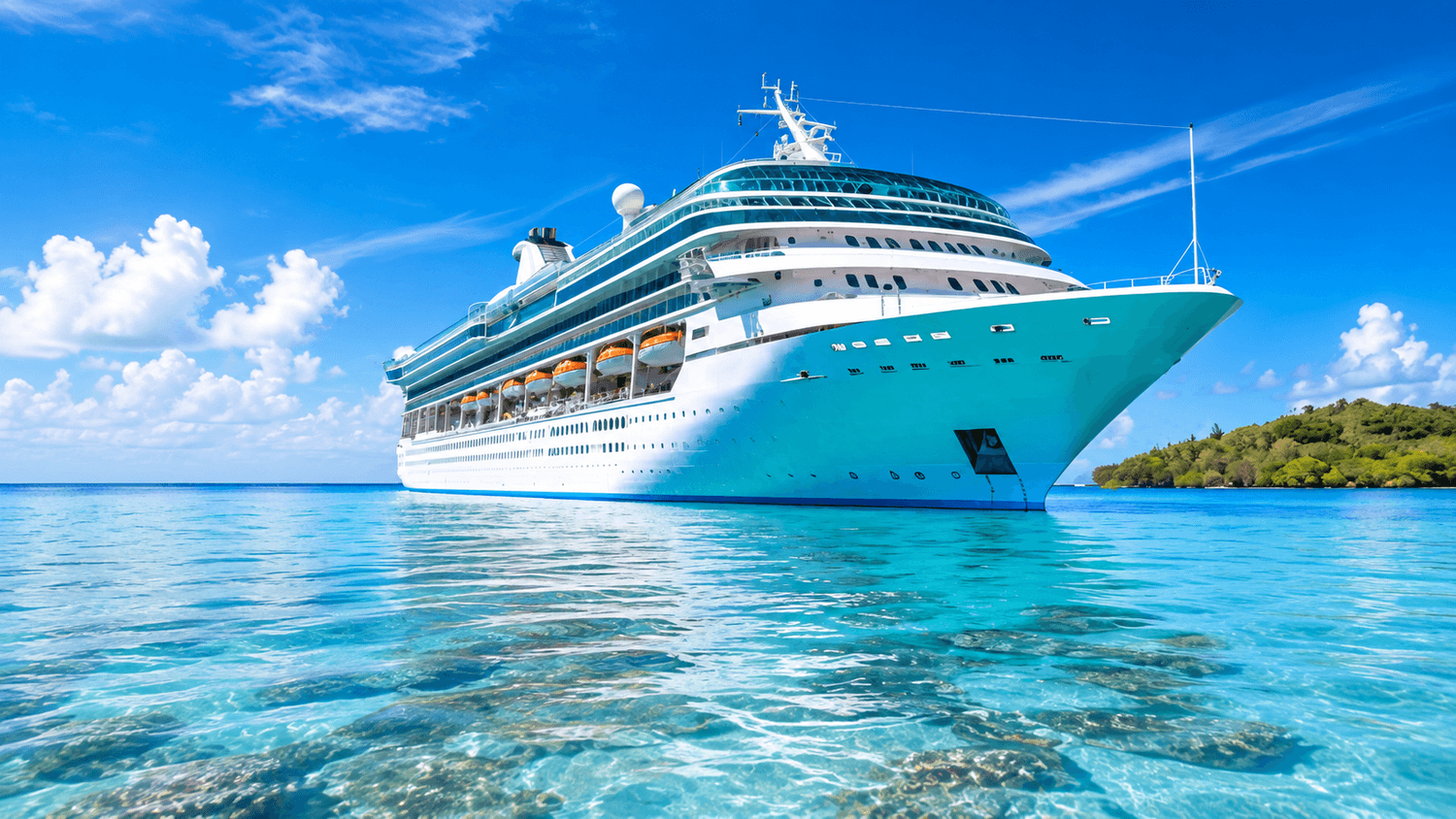
Your first cruise comes with its own vocabulary.
People start talking about the port side, muster stations, tender ports, gangways, and onboard credit as though everyone was born knowing what those things mean.
Don’t worry. You don’t need to memorize an entire nautical dictionary before your vacation.
But knowing a few common cruise ship terms can make your first cruise much easier. You’ll understand announcements, find your way around the ship faster, and know what the cruise line means when it gives you instructions.
Here are the cruise terms you're most likely to hear before and during your cruise.
Embarkation
Embarkation simply means getting on the ship at the beginning of your cruise.
Your embarkation day is the first day of your cruise—the day you arrive at the cruise terminal, check in, go through security and board the ship.
Depending on the cruise line, you may be given an arrival or check-in time before sailing.
Once you're onboard, your cabin may not be ready immediately, so keep anything you might need during those first few hours in your carry-on bag.
Disembarkation
Disembarkation is the opposite: getting off the ship.
You'll disembark at ports during your cruise, but cruisers most often use the term when talking about the final morning of the cruise.
You may also hear it called debarkation.
Unfortunately, both mean the same thing: your cruise is over and they're making you leave.
Port and Starboard
These are two of the most useful nautical terms to know.
Port is the left side of the ship when you're facing forward toward the bow.
Starboard is the right side.
An easy way to remember it is that port and left both have four letters.
One important point: port and starboard don't change when you turn around. They're based on the ship itself, not the direction you're facing.
Forward and Aft
Forward means toward the front of the ship.
Aft means toward the back.
You'll see these terms constantly on deck plans, signs and elevator directories.
If your cabin is described as an aft cabin, for example, it's located toward the rear of the ship.
Bow and Stern
The bow is the front of the ship.
The stern is the back.
Forward and aft describe directions or areas of the ship, while bow and stern refer more specifically to the front and rear portions of the vessel.
Midship
Midship is the middle section of the ship.
You'll often see cabins described as forward, midship or aft when choosing your stateroom.
Midship cabins can be popular with travelers who are concerned about motion because they're generally closer to the ship's center of movement.
Deck
A deck is essentially a floor or level of the cruise ship.
Instead of saying your cabin is on the eighth floor, you'll usually say it's on Deck 8.
Large cruise ships can have many passenger decks, so knowing your deck number—and whether your cabin is forward, midship or aft—can save you a lot of wandering.
Stateroom or Cabin
These words are generally interchangeable.
Your stateroom is your cabin—the room where you'll sleep during the cruise.
Common categories include:
Interior: No exterior window
Oceanview: Has a window or porthole
Balcony: Has a private outdoor balcony
Suite: Typically larger accommodations with additional space or amenities
Cruise lines may have many subcategories within those basic groups.
Guaranteed Cabin
A guaranteed cabin, sometimes shown as a GTY cabin, means you book a particular cabin category or minimum category without selecting the exact cabin number.
The cruise line assigns your cabin later.
Guarantee rates can sometimes save money, but you're giving the cruise line control over where your cabin is located.
Muster Drill
The muster drill is the mandatory safety procedure passengers complete near the beginning of the cruise.
Your muster station is the assigned location associated with your cabin where you would report during certain emergencies.
Cruise lines increasingly use electronic or partially electronic muster procedures, but you still need to complete whatever safety requirements your cruise line provides.
Don't skip it. The ship keeps track of who has completed the required safety procedure.
Gangway
The gangway is the walkway used to get on and off the ship.
You'll often hear announcements such as:
“The gangway is located on Deck 2.”
The location can change depending on the port, tides and how the ship is docked, so pay attention to announcements and signs rather than assuming you'll leave the ship from the same deck every time.
Port of Call
A port of call is a destination the ship visits during your cruise.
For example, Cozumel might be one port of call on a Western Caribbean itinerary.
Your cruise may spend several hours in port before departing for the next destination.
Sea Day
A sea day is a day when the ship doesn't visit a port.
You're sailing between destinations, and the day is spent onboard.
Sea days are when you'll usually find a full schedule of activities, entertainment, dining and other events around the ship.
Port Day
A port day is a day when your ship is visiting a destination.
You can leave the ship to explore independently, take a shore excursion or stay onboard.
And yes—you are allowed to stay on the ship during a port day if you'd rather enjoy a quieter ship.
Tender Port
Most of the time, a cruise ship docks directly at a pier.
But sometimes it can't.
At a tender port, the ship anchors offshore and smaller boats transport passengers between the ship and land.
You may need a tender ticket or assigned boarding time depending on the cruise line and port.
Tendering also takes additional time, which is important when planning independent activities ashore.
Shore Excursion
A shore excursion is a tour or activity you take while the ship is in port.
You can book excursions through the cruise line or through independent tour companies.
Excursions might include snorkeling, sightseeing tours, beach trips, food tours, wildlife experiences, historical attractions and just about anything else a destination has to offer.
Planning your port days? Browse tours and shore excursions on Viator before you sail.
All Aboard Time
This one matters.
All aboard time is the deadline for passengers to be back aboard the ship before departure.
It is not necessarily the same as the ship's departure time.
If the itinerary says the ship leaves at 5:00 p.m., your all aboard time might be 4:30 p.m. or earlier.
Always follow the time provided by your cruise line.
The ship does not want to leave passengers behind—but you don't want to find out exactly how long they're willing to wait.
Ship Time
Ship time is the official time being observed onboard the cruise ship.
This becomes important when you're visiting destinations in different time zones.
Your ship may or may not change its clocks to match local time.
Always follow the cruise line's instructions about ship time and all aboard time. Don't rely solely on your phone automatically changing time zones when you go ashore.
Main Dining Room (MDR)
The Main Dining Room, commonly shortened to MDR, is one of the primary included dining venues on most mainstream cruise ships.
Meals are generally served from a menu with table service.
Depending on your cruise line, you may have traditional dining at an assigned time, flexible dining, or a choice between the two.
Buffet
The buffet is the casual, self-service dining venue found on most cruise ships.
It's usually open for breakfast, lunch and dinner, although hours vary.
It’s also where you might find a certain cruise blogger enjoying a yummy cheeseburger and fries because, of course, she was eating something instead of checking the day’s schedule.
But we won’t name names.
Specialty Dining
Specialty dining refers to restaurants that are separate from the ship's standard included dining options.
Some charge a flat fee while others price food à la carte.
Steakhouses, sushi restaurants and upscale Italian restaurants are common examples.
Gratuities
Gratuities are service charges that compensate crew members who provide services during your cruise.
Many cruise lines automatically add a daily gratuity amount to each passenger's onboard account unless gratuities were prepaid.
Additional gratuities may also be added automatically to drinks, specialty dining, spa services and other purchases.
Onboard Account
Your onboard account is essentially your running bill during the cruise.
Most cruise ships operate largely cash-free onboard. Purchases are charged to your cruise account using your room key card, wearable device or cruise line app.
At the end of the cruise, the balance is typically charged to the payment method you placed on file.
Check the account periodically during your trip so you can address incorrect charges before disembarkation.
Onboard Credit (OBC)
Onboard credit, usually abbreviated OBC, is money credited to your onboard account that you can use for eligible purchases during the cruise.
You might receive onboard credit from a cruise promotion, travel advisor, cruise line offer or shareholder benefit.
What you can use it for depends on the cruise line and the type of credit.
Cruise Card or Sail & Sign Card
Your cruise card is much more than a room key.
Depending on the cruise line, you'll use it to open your cabin, make purchases, identify yourself when leaving and returning to the ship, and access other onboard services.
Cruise lines use different names for these cards, but they serve essentially the same purpose.
Don't leave the ship without it.
Cruise Director
The cruise director is one of the most visible members of the ship's entertainment team.
The cruise director and staff help oversee activities, shows, announcements, games and other entertainment around the ship.
No, the cruise director isn't the person driving the ship.
That's the captain.
Captain
The captain, or master, is the person with ultimate responsibility for the vessel.
Although passengers may see the captain at events or hear announcements from the bridge, there's an entire navigation and deck team responsible for safely operating the ship.
Bridge
The bridge is the ship's command and navigation center.
This is where the captain and bridge officers navigate and oversee the operation of the vessel.
It is not the same thing as the outdoor walkway connecting two parts of the ship.
Atrium
The atrium is a large central public area found on many cruise ships, often spanning several decks.
It may contain bars, lounges, guest services, shops, entertainment areas or staircases and is frequently one of the ship's main gathering spots.
Lido Deck
Traditionally, Lido Deck refers to a deck containing outdoor recreation areas such as the main pool and nearby casual dining.
Not every cruise line actually calls it the Lido Deck, but cruisers still use the term frequently.
Cruise Terminal
The cruise terminal is the building at the port where passengers check in, go through security, drop or collect luggage and board or leave the ship.
A cruise port may have several different terminals, so don't assume that simply arriving at the port means you've arrived at the correct place.
Check your cruise documents for your assigned terminal.
Homeport
A ship's homeport is the port from which it regularly begins and ends cruises.
For example, a ship that routinely sails round-trip cruises from Tampa may be described as being homeported in Tampa.
Repositioning Cruise
A repositioning cruise happens when a cruise ship moves from one region or homeport to another, often because of seasonal changes.
Instead of moving the ship empty, the cruise line sells the voyage as a cruise.
These itineraries can include unusual combinations of ports and more sea days than a typical cruise.
Back-to-Back Cruise
A back-to-back cruise means taking consecutive cruises on the same ship.
Instead of disembarking at the end of the first sailing and going home, you remain for the next cruise.
There are usually special procedures for back-to-back passengers on turnaround day.
Cruise Fare
Your cruise fare is the base price you pay for the cruise itself.
And this is where new cruisers sometimes get a surprise.
The cruise fare is not necessarily the total cost of the vacation.
Taxes, port fees, gratuities, transportation, hotels, drinks, specialty dining, Wi-Fi, shore excursions and other expenses can add considerably to the final cost.
Related: How Much Does a Cruise Really Cost? A Complete Budget Breakdown
Final Payment Date
The final payment date is the deadline for paying the remaining balance on your cruise.
If you booked using a deposit, don't confuse the deposit with having fully paid for the trip.
Missing the final payment deadline can put your reservation at risk, so make sure you know the date when you book.
Cruise Planner
Many cruise lines have an online planning area where passengers can purchase or reserve things before sailing.
Depending on the cruise line, you may be able to book shore excursions, specialty dining, drink packages, Wi-Fi, spa treatments and other extras.
Booking ahead can sometimes provide better availability or pricing than waiting until you're onboard.
Cruise Line App
Most major cruise lines now have a mobile app passengers use before and during the cruise.
Depending on the cruise line, the app may contain your boarding information, daily schedule, dining reservations, deck plans, onboard account, messaging and other features.
Download it before leaving home, not while standing at the cruise terminal fighting with your phone.
Daily Planner
The daily planner is the ship's schedule of activities and events.
Years ago, these were primarily printed and delivered to your cabin. Many cruise lines now put most or all of the daily schedule in their mobile app, although printed versions may still be available on some ships.
Check it each day because there is usually far more happening onboard than you'll ever have time to do.
Know the Language, Then Enjoy the Cruise
You don't need to memorize every cruise ship term before your first sailing.
After a day or two onboard, words like aft, starboard, gangway and MDR will start sounding completely normal.
The most important terms are the ones that help you navigate the ship, understand safety instructions and get back onboard on time.
Everything else you'll learn as you go.
And before long, you'll be the experienced cruiser explaining to someone else that “aft” does not mean the fourth floor.
Ready to compare cruises? Browse current sailings and prices with CruiseDirect.
Planning your ports? Browse shore excursions and activities with Viator.
Related Cruising Style Articles
Affiliate Disclosure: This article may contain affiliate links. If you make a purchase, book a cruise, or book a travel-related service through these links, I may earn a commission at no additional cost to you. As an Amazon Associate, I earn from qualifying purchases. Thank you for supporting Cruising Style.
Home | About | Contact | Privacy Policy | Terms of Service | Affiliate Disclosure