Do Cruise Ships Have Doctors?
Here's What Every Cruiser Should Know
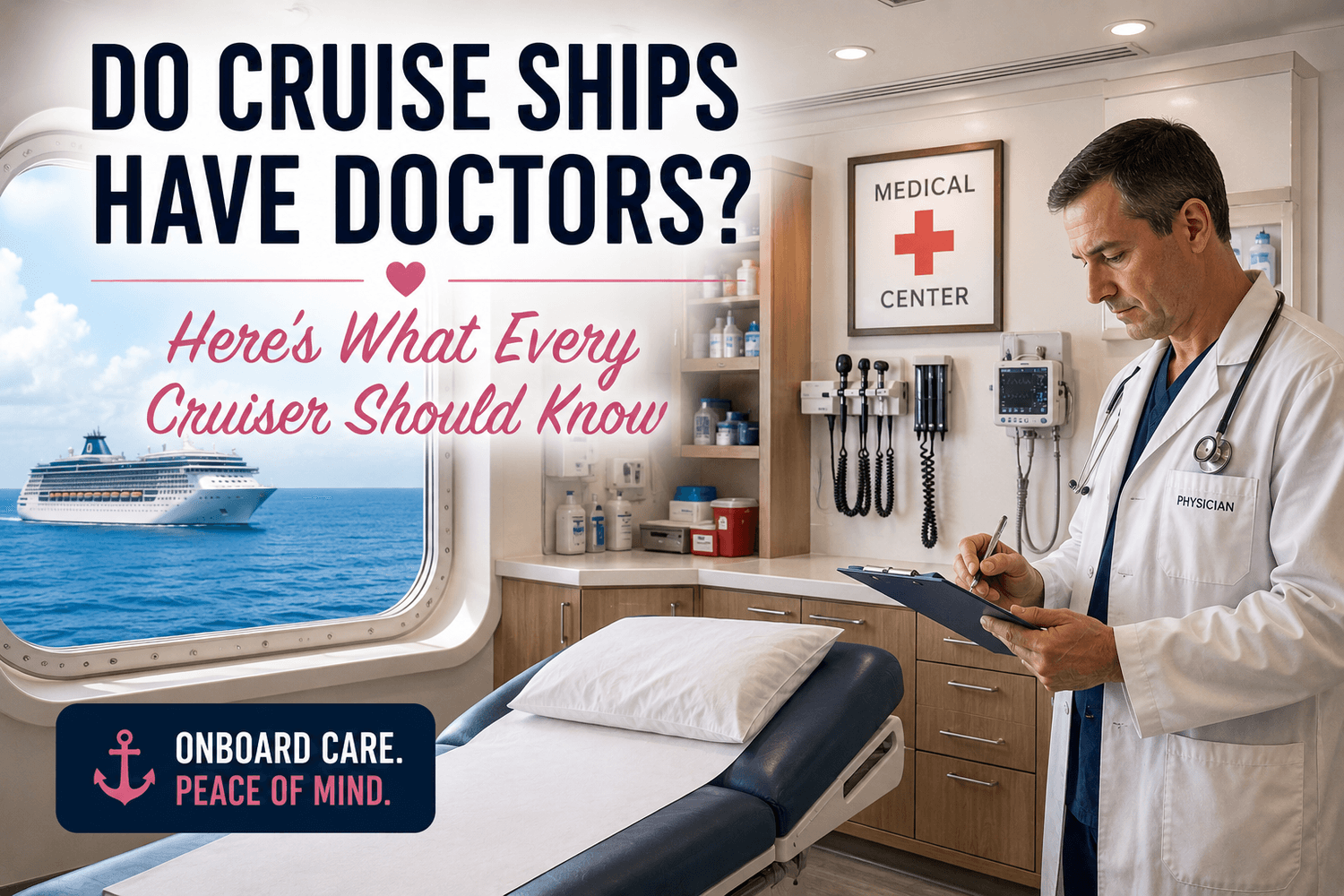
One of the most common questions first-time cruisers ask is, "Do cruise ships have doctors?"
The answer is yes.
Most modern cruise ships have onboard medical centers staffed by licensed physicians and nurses who are trained to care for passengers and crew members. While these facilities aren't the same as a full-service hospital, they're equipped to treat many common illnesses, injuries, and medical emergencies that can occur during your vacation.
Knowing what medical care is available before you sail can give you added peace of mind—especially if you have an ongoing medical condition or simply want to be prepared.
Do All Cruise Ships Have Doctors?
Most large ocean-going cruise ships have at least one physician and several registered nurses onboard.
The size of the medical team often depends on the size of the ship and the number of
passengers and crew. Larger ships typically have larger medical staffs and expanded medical facilities.
Medical professionals working aboard cruise ships are licensed, experienced healthcare providers who are trained to manage a wide variety of medical situations while at sea.
What Can the Medical Center Treat?
Cruise ship medical centers are equipped to handle many common medical problems, including:
Motion sickness
Respiratory illnesses
Stomach viruses
Dehydration
Allergic reactions
Minor burns
Cuts and lacerations
Sprains and fractures
Urinary tract infections
Ear infections
Minor skin infections
They can also stabilize passengers experiencing more serious medical emergencies until additional care can be reached.
What Equipment Do Cruise Ship Medical Centers Have?
While every cruise line is different, many medical centers are equipped with:
Cardiac monitors
Defibrillators (AEDs)
Oxygen
IV fluids and medications
X-ray equipment
Laboratory testing
Emergency medications
Basic wound care supplies
These resources allow the medical team to evaluate and treat many conditions that occur during a cruise.
Can Cruise Ship Doctors Prescribe Medication?
Yes.
Depending on your condition and the medications available onboard, the ship's doctor may prescribe medications or provide treatment directly through the medical center.
However, cruise ships don't carry every medication. Specialty medications, certain injectable drugs, and controlled substances may not always be available.
That's one of the reasons it's so important to bring enough prescription medication for your entire cruise, plus a few extra days in case your return home is delayed.
Can Cruise Ship Doctors Perform Surgery?
Cruise ship medical centers are designed to stabilize and treat patients—not perform major surgery.
If a passenger requires specialized care that's beyond what the medical center can safely provide, the medical team will work with the captain to determine the best course of action.
Depending on the situation, that may include continuing to the next port, diverting to a closer port, or arranging a medical evacuation if conditions allow.
Is Medical Care Included in Your Cruise Fare?
No.
Medical treatment received in the ship's medical center is billed separately from your cruise fare.
Depending on the care you receive, charges may include:
Office visits
Physician and nursing care
Medications
Laboratory testing
X-rays
IV therapy
Medical procedures
If you have travel insurance, some of these expenses may be covered, depending on your policy.
When Should You Go to the Medical Center?
Don't wait if you're feeling seriously ill.
Visit the medical center or notify a crew member immediately if you experience:
Chest pain
Difficulty breathing
Severe abdominal pain
High fever
Persistent vomiting
Signs of dehydration
Serious injuries
Symptoms of a stroke
Any condition that concerns you
Seeking treatment early often leads to better outcomes and may prevent a minor problem from becoming something more serious.
The Bottom Line
The good news is that cruise ships are well prepared to care for passengers who become ill or injured during their vacation.
While the medical center isn't a replacement for a hospital, having experienced doctors, registered nurses, and emergency medical equipment onboard provides an important layer of protection while you're traveling.
Before every cruise, pack enough prescription medications, review your insurance coverage, and know where the medical center is located once you board. Hopefully you'll never need it—but it's reassuring to know help is available if you do.
You May Also Enjoy
👉 What Happens If You Get Sick on a Cruise?
👉 What Happens If You Have a Medical Emergency on a Cruise?
👉 Does Medicare Cover Medical Care on a Cruise Ship?
👉 What Happens If You Forget Your Prescription Medication on a Cruise?
Ready to Plan Your Next Cruise?
Compare cruise prices, itineraries, and special offers with Cruise Direct.
👉 Find Your Perfect Cruise Here: Cruise Direct
Medical Disclaimer
The information provided on Cruising Style is for general informational and educational purposes only and is not intended as medical advice, diagnosis, or treatment. Always consult your physician or other qualified healthcare provider regarding any medical condition, medication, or health concern and before making decisions that could affect your health while traveling. Cruise line policies, medical services, and international medication requirements can change, so verify current requirements with your cruise line and appropriate authorities before you travel.
Affiliate Disclosure: This article may contain affiliate links. If you make a purchase, book a cruise, or book a travel-related service through these links, I may earn a commission at no additional cost to you. As an Amazon Associate, I earn from qualifying purchases. Thank you for supporting Cruising Style.
Home | About | Contact | Privacy Policy | Terms of Service | Affiliate Disclosure