What Happens If
You Have a Medical Emergency on a Cruise?
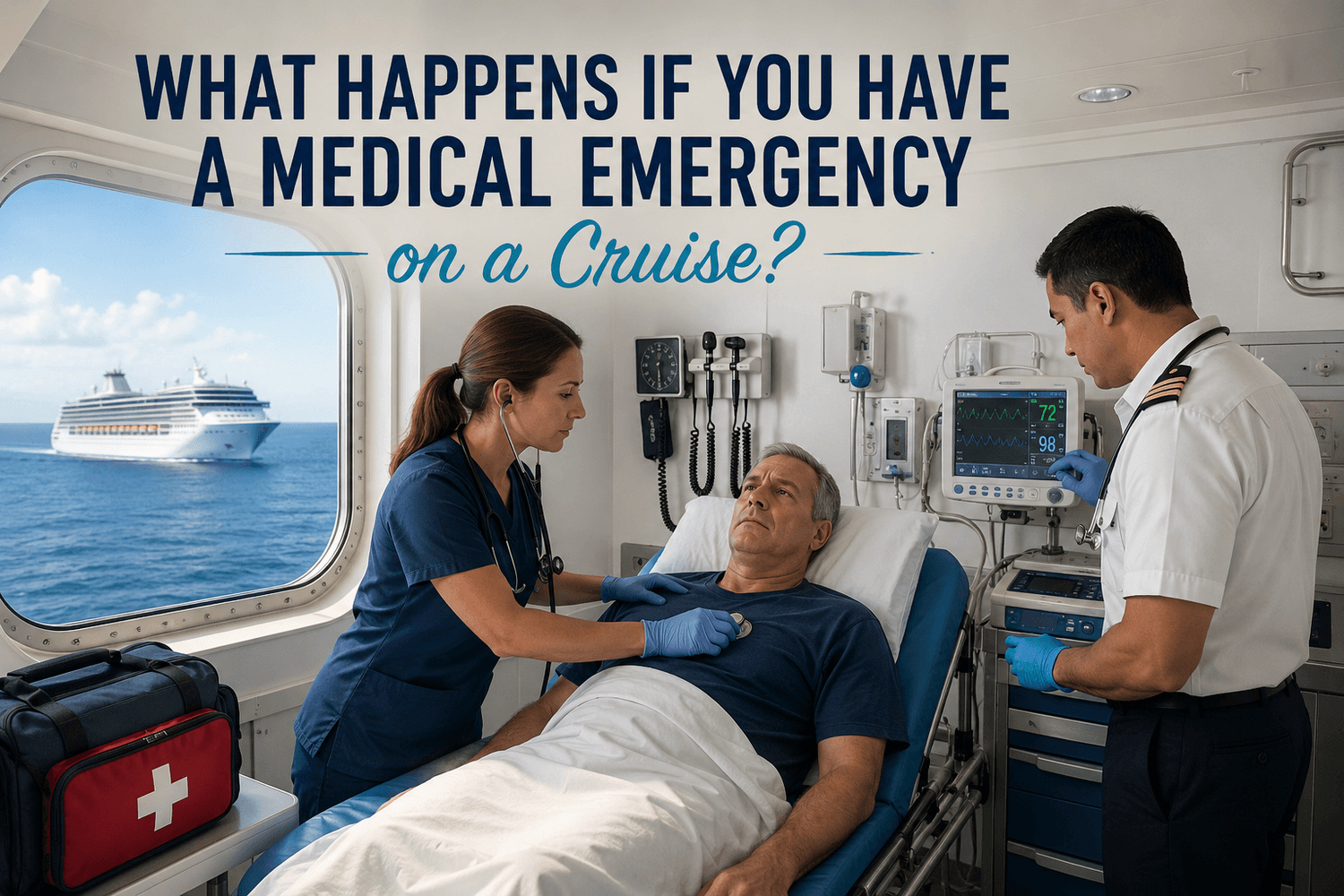
For most people, a cruise is a relaxing vacation filled with beautiful destinations, great food, and unforgettable memories.
But what happens if the unexpected occurs and you experience a serious medical emergency while you're at sea?
The good news is that cruise ships are prepared for medical emergencies.
While they aren't floating hospitals, they have trained medical professionals, emergency equipment, and well-established procedures for caring for passengers until additional medical care can be reached if necessary.
Knowing what to expect can provide peace of mind before your cruise ever begins.
What Is Considered a Medical Emergency?
A medical emergency is any condition that requires immediate medical attention to protect your life or prevent serious complications.
Examples include:
Chest pain or a suspected heart attack
Stroke symptoms
Difficulty breathing
Severe allergic reactions
Serious falls or head injuries
Broken bones
Heavy bleeding
Seizures
Loss of consciousness
Severe burns
If you believe you or someone else is experiencing a medical emergency, don't wait to see if the problem improves. Contact the ship's emergency number immediately or notify the nearest crew member.
What Happens First?
Cruise ships have emergency procedures similar to those used in hospitals.
Depending on the situation, trained medical personnel may come directly to your cabin or another location onboard. If you're able, you may be taken to the ship's medical center for evaluation and treatment.
The medical team will quickly assess your condition, begin treatment, and determine whether your condition can safely be managed onboard or requires additional medical care ashore.
Are Cruise Ship Medical Centers Equipped for Emergencies?
Most modern cruise ships have medical centers staffed by licensed physicians and nurses with experience in emergency medicine.
Medical centers are typically equipped to provide care for many urgent medical situations, including:
Cardiac monitoring
Oxygen therapy
IV medications and fluids
Wound care
X-rays
Laboratory testing
Defibrillators (AEDs)
Emergency medications
Although these facilities are well equipped, they are not the same as a full-service hospital.
Some serious conditions require treatment that simply isn't available at sea.
Will the Ship Turn Around?
Sometimes.
If a passenger experiences a life-threatening emergency, the ship's captain works closely with the medical team to determine the safest course of action.
Depending on the circumstances, the ship may:
Continue to the next scheduled port if it's close.
Change course to reach a nearer port.
Coordinate with the Coast Guard or local authorities.
Request a medical evacuation if conditions allow.
Every situation is different.
The decision depends on the patient's condition, the ship's location, weather, sea conditions, and how quickly advanced medical care can be reached.
Can Someone Be Airlifted from a Cruise Ship?
Yes—but not always.
Medical evacuations by helicopter make headlines, but they only occur under the right circumstances.
Weather, visibility, wind conditions, daylight, sea state, and the ship's distance from shore all play a role. If conditions aren't safe for a helicopter rescue, the captain and medical team will choose the safest available alternative.
What Happens to Family Members?
If you're traveling with family or friends, the crew will do everything possible to keep them informed.
If you need to leave the ship for treatment, your traveling companion may be able to accompany you, depending on the circumstances and local requirements.
Because every situation is different, cruise lines handle these cases individually while helping passengers make travel arrangements whenever possible.
How Much Does Emergency Medical Care Cost?
Emergency medical care on a cruise ship is not included in your cruise fare.
Charges may include:
Emergency evaluation
Physician and nursing care
Diagnostic testing
Medications
IV therapy
Medical procedures
If you're transferred to a hospital ashore or require medical evacuation, those expenses can become significant.
Concerned about unexpected medical expenses while traveling?
You can compare travel insurance plans from multiple providers, including available medical and evacuation benefits and pricing.
👉 Compare Travel Insurance Plans
Why Travel Insurance Matters
Medical emergencies are one of the biggest reasons many experienced cruisers purchase travel insurance.
Depending on the policy, travel insurance may help cover:
Emergency medical treatment
Hospitalization
Medical evacuation
Trip interruption
Additional travel expenses
Before purchasing a policy, read the details carefully so you understand exactly what's covered.
Want to compare your options before your cruise?
Squaremouth lets you compare travel insurance plans, benefits, and prices from multiple providers in one place.
👉 Compare Travel Insurance Options
The Bottom Line
Medical emergencies on cruises are relatively uncommon, but they can happen anywhere—including on vacation.
The reassuring news is that cruise ships are prepared to respond quickly, with trained doctors, nurses, emergency equipment, and established procedures designed to provide immediate care and get passengers to advanced medical treatment when necessary.
Before every cruise, make sure you have enough prescription medication, review your insurance coverage, and consider whether travel insurance is right for your trip.
A little preparation before you sail can provide valuable peace of mind and help you focus on enjoying your vacation.
Ready to Plan Your Next Cruise?
Compare cruise prices, itineraries, and special offers:
👉 Find Your Perfect Cruise Here: Cruise Direct
You May Also Enjoy
👉 What Happens If You Get Sick on a Cruise?
👉 Does Medicare Cover Medical Care on a Cruise Ship?
👉 Cruise Documents and Passports: Everything You Need Before You Sail
👉 What to Pack for a Cruise: Don't Forget These Essentials
Medical Disclaimer
The information provided on Cruising Style is for general informational and educational purposes only and is not intended as medical advice, diagnosis, or treatment. Always consult your physician or other qualified healthcare provider regarding any medical condition, medication, or health concern and before making decisions that could affect your health while traveling. Cruise line policies, medical services, and international medication requirements can change, so verify current requirements with your cruise line and appropriate authorities before you travel.
Affiliate Disclosure: This article may contain affiliate links. If you make a purchase, book a cruise, or book a travel-related service through these links, I may earn a commission at no additional cost to you. As an Amazon Associate, I earn from qualifying purchases. Thank you for supporting Cruising Style.
Home | About | Contact | Privacy Policy | Terms of Service | Affiliate Disclosure