Can You Bring Medical Equipment on a
Cruise? Everything You Need to Know Before You Sail
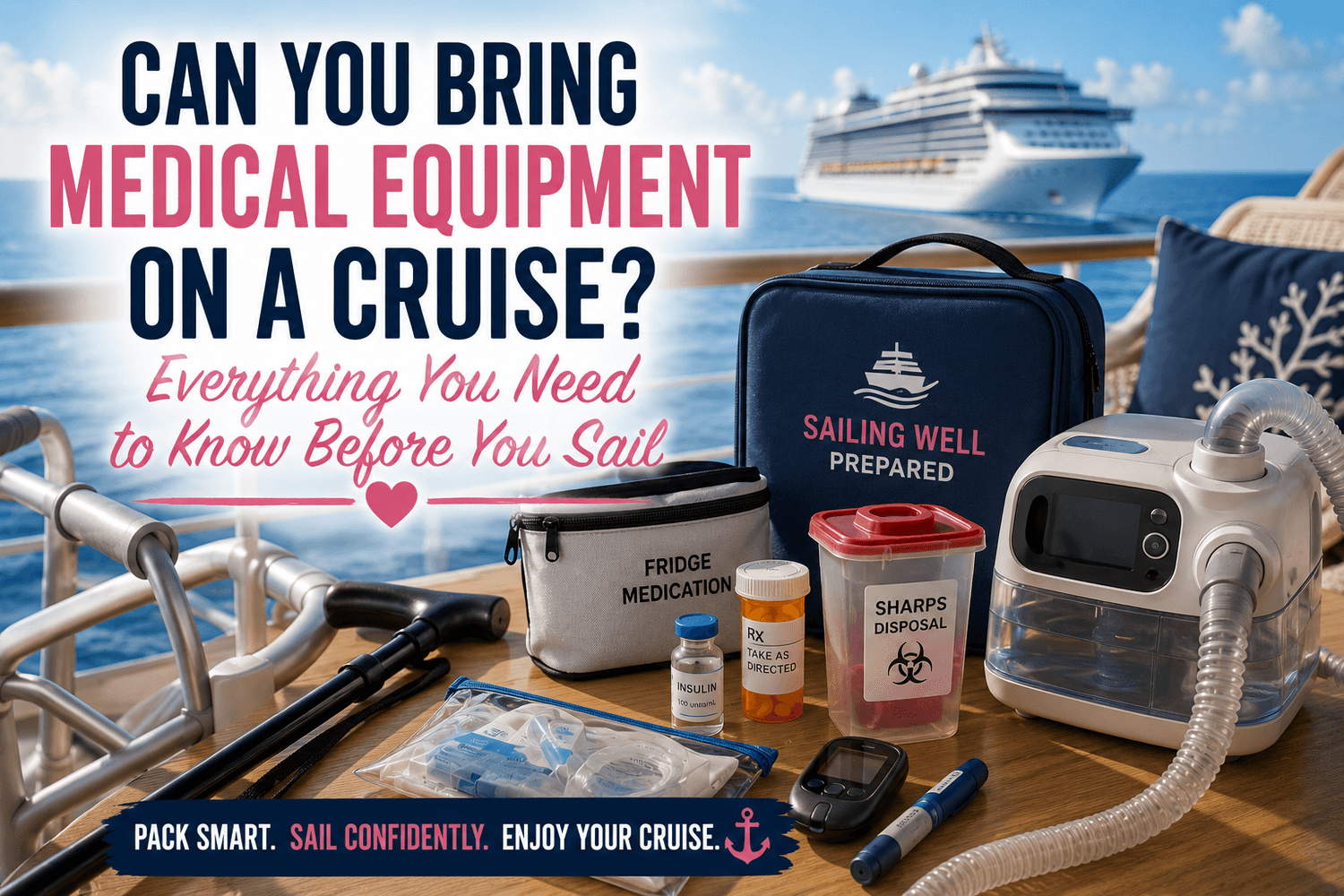
If you use medical equipment or take prescription medications, you may be wondering whether you can bring them on a cruise.
The good news is that cruise lines welcome passengers with a wide variety of medical needs.
Whether you travel with a CPAP machine, portable oxygen concentrator, insulin, mobility scooter, or another medical device, a little planning before your cruise can help ensure everything goes smoothly.
Here's what you need to know before you pack.
What Medical Equipment Can You Bring on a Cruise?
Most cruise lines allow passengers to bring medically necessary equipment onboard.
Common examples include:
CPAP and BiPAP machines
Portable oxygen concentrators (POCs)
Nebulizers
Blood glucose monitors and continuous glucose monitors (CGMs)
Insulin and other injectable medications
EpiPens
Walkers and canes
Wheelchairs
Mobility scooters
Hearing aids and extra batteries
Compression stockings
Portable medical monitoring devices
If you have questions about a specific device, contact your cruise line well before your sailing date.
Keep Medical Equipment in Your Carry-On
Never pack essential medical equipment or prescription medications in checked luggage.
Airlines occasionally delay or lose luggage, and you don't want to be without equipment you depend on every day.
Always carry onboard:
Prescription medications
Medical devices
Chargers
Batteries
Tubing
Masks
Pen needles
Test strips
Sensors
Any other supplies you'll need during your cruise
It's also a good idea to pack several extra days' worth of supplies in case your return home is delayed.
Traveling with a CPAP Machine
CPAP machines are one of the most common medical devices brought aboard cruise ships.
Most cruise lines allow them without any problems.
Before you sail:
Pack your CPAP in your carry-on.
Bring your power cord and any adapters you may need.
Pack extra tubing, filters, and a mask if possible.
Contact the cruise line if you have questions about electrical outlets or extension cord policies.
What If You Use Oxygen?
Passengers who require supplemental oxygen should contact their cruise line well before departure.
Many cruise lines allow portable oxygen concentrators, but policies vary regarding oxygen delivery services and approved equipment.
Don't wait until the last minute to make arrangements.
Traveling with Refrigerated Medications
If you take medications that must remain refrigerated, such as insulin or certain injectable medications, plan ahead.
Don't assume your cabin mini-fridge is designed to keep medications at the proper temperature.
Before your cruise:
Contact the cruise line to ask about refrigeration options.
Keep medications in your carry-on while traveling.
Follow your medication manufacturer's storage recommendations.
What Should You Do with Used Needles and Sharps?
If you use insulin, Ozempic®, Mounjaro®, or any other injectable medication, you'll also need a safe way to dispose of used needles, pen needles, lancets, and other sharps.
Never throw loose sharps into your cabin trash.
Many cruise lines can provide a sharps container through the medical center or housekeeping. If your cabin doesn't already have one, request one shortly after boarding.
When it's full, return it to the medical center or follow the cruise line's instructions for proper disposal.
Planning ahead makes managing injectable medications much easier during your cruise.
Bring Copies of Important Medical Information
Before you leave home, consider carrying:
A current medication list
Copies of your prescriptions
Your healthcare provider's contact information
Your pharmacy's phone number
A list of allergies
Your insurance information
Having this information readily available can be extremely helpful if you need medical care while traveling.
The Bottom Line
Thousands of people cruise every year while using medical equipment or managing chronic health conditions.
The key is preparation.
Pack your medications and medical equipment in your carry-on, bring extra supplies whenever possible, contact your cruise line if special arrangements are needed, and plan ahead for things like refrigerated medications and sharps disposal.
A little preparation before your cruise can help you relax and enjoy your vacation with confidence.
You May Also Enjoy
👉 Do Cruise Ships Have Doctors? Here's What Every Cruiser Should Know
👉 What Happens If You Forget Your Prescription Medication on a Cruise?
👉 What Happens If You Get Sick on a Cruise?
👉 What Happens If You Have a Medical Emergency on a Cruise?
👉 Does Medicare Cover Medical Care on a Cruise Ship?
Ready to Plan Your Next Cruise?
Compare cruise prices, itineraries, and special offers with CruiseDirect.
👉 Find Your Perfect Cruise Here: Cruise Direct
Medical Disclaimer
The information provided on Cruising Style is for general informational and educational purposes only and is not intended as medical advice, diagnosis, or treatment. Always consult your physician or other qualified healthcare provider regarding any medical condition, medication, or health concern and before making decisions that could affect your health while traveling. Cruise line policies, medical services, and international medication requirements can change, so verify current requirements with your cruise line and appropriate authorities before you travel.
Affiliate Disclosure: This article may contain affiliate links. If you make a purchase, book a cruise, or book a travel-related service through these links, I may earn a commission at no additional cost to you. As an Amazon Associate, I earn from qualifying purchases. Thank you for supporting Cruising Style.
Home | About | Contact | Privacy Policy | Terms of Service | Affiliate Disclosure