How Cruise Ships Handle Food Allergies and Dietary Restrictions
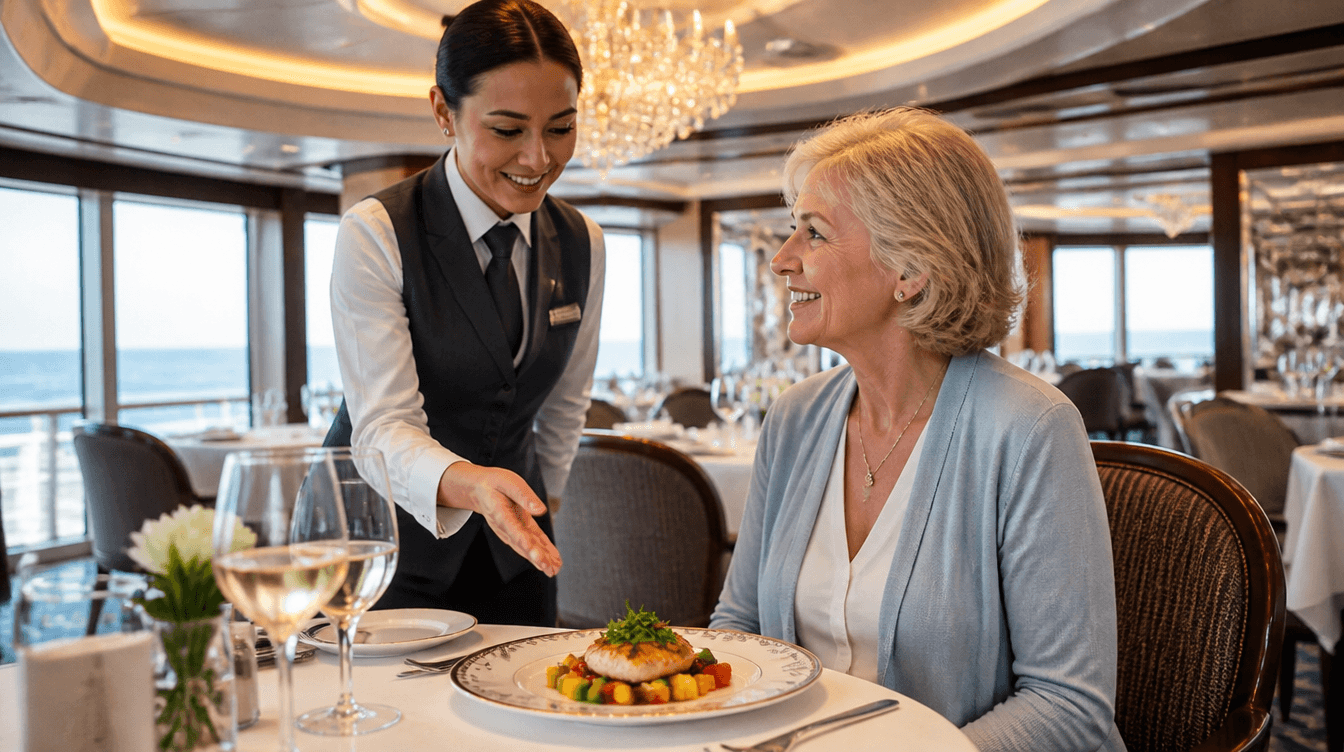
Food is a huge part of the cruise experience.
But if you have a food allergy, celiac disease, lactose intolerance, diabetes, or another dietary restriction, walking into a cruise ship buffet with hundreds of dishes may be a little less exciting.
You may be wondering:
Will there actually be food I can eat?
In many cases, yes.
Major cruise lines routinely accommodate a variety of dietary needs, including food allergies, gluten-free diets, vegetarian and vegan diets, low-sodium or low-sugar diets, and certain religious dietary requirements.
But there’s an important catch:
Don't wait until you're standing in front of the buffet on embarkation day to mention it.
Cruise-line procedures vary, and some special dietary requests require advance notice. The earlier you communicate your needs, the better prepared the ship can be.
Here's what you should know before you sail.
Can Cruise Ships Accommodate Food Allergies?
Most major cruise lines have procedures for guests traveling with food allergies.
Common allergies they may be accustomed to handling include:
Peanuts and tree nuts
Milk and dairy
Eggs
Wheat
Soy
Fish
Shellfish
Sesame
Disney Cruise Line, for example, specifically addresses these common allergens in its dietary guidance, while Royal Caribbean says it makes efforts to accommodate food allergies and other special dietary requirements.
That doesn't mean every restaurant, buffet station, or food item aboard every ship can automatically accommodate every allergy.
If your allergy is severe, complicated, or involves multiple ingredients, contact the cruise line well before sailing and ask exactly how your needs will be handled.
Tell the Cruise Line Before Your Cruise
This is probably the most important thing you can do.
Don't assume that mentioning your allergy to your waiter at dinner on the first night is enough.
Cruise lines have different procedures and deadlines for special dietary requests.
Norwegian, for example, asks guests with food allergies or special medical diets to contact its Access Desk before sailing and says special dietary requests should generally be submitted at least 45 days before departure.
Princess asks guests or their travel consultants to advise the cruise line in writing, with deadlines that vary by itinerary.
When you make your request, be specific.
“I'm allergic to tree nuts” is much more useful than simply saying, “I have dietary restrictions.”
If cross-contact is a serious concern, say that too.
And once you're onboard, confirm your dietary needs with the appropriate dining staff rather than assuming the information automatically reached everyone who may prepare or serve your food.
The Main Dining Room May Be Your Best Friend
For cruisers with significant dietary restrictions, the Main Dining Room can often be easier to navigate than grabbing food from multiple venues around the ship.
You have servers you can communicate with, menus you can discuss, and dining staff who can help identify appropriate choices.
Depending on the cruise line and your needs, you may also be able to discuss upcoming meals in advance.
If you're uncertain about a dish, ask.
This is one situation where being the passenger who asks a lot of questions is perfectly reasonable.
What About the Cruise Ship Buffet?
The buffet deserves a little more caution.
Even when appropriate foods are available, self-service areas introduce another issue:
cross-contact.
Serving utensils can be moved between dishes. Guests can accidentally drop food into neighboring containers. Ingredients that appear safe may contain sauces, seasonings, or other components you weren't expecting.
If you have a serious allergy or medically necessary dietary restriction, don't rely solely on what a buffet dish looks like.
Ask a crew member for help identifying safe choices and, when necessary, ask whether food can be prepared separately.
The buffet may still be perfectly usable for you—but guessing isn't a good strategy when the consequences could be serious.
And for once, the biggest buffet danger isn't a certain cruise blogger disappearing in search of a cheeseburger and fries. 😂
Gluten-Free Dining on a Cruise
Gluten-free options have become common on many cruise ships.
Royal Caribbean specifically lists gluten-free among the dietary needs it can accommodate, while Carnival says its chefs prepare options for several diets, including gluten-free. Princess also accepts special dietary and allergy requests through its established process.
However, there's an important distinction between someone who prefers to avoid gluten and someone with celiac disease or another condition requiring strict avoidance.
If cross-contact matters medically, tell the cruise line and dining staff explicitly.
Don't assume that something labeled or described as gluten-free was necessarily prepared in an environment free from cross-contact.
Vegetarian and Vegan Food
Vegetarian options are now commonplace aboard major cruise ships.
Royal Caribbean says vegetarian meals are available daily in its Main Dining Room and Windjammer, and vegan choices are available in its Main Dining Room.
Carnival also lists vegetarian options among the diets its chefs accommodate.
Vegan travelers may need to do a little more asking, particularly outside the Main Dining Room.
A dish that looks vegan may contain butter, dairy, eggs, or an animal-based stock, so ask rather than assume.
Dairy-Free and Lactose-Free Diets
Dairy-free and lactose-free aren't necessarily the same thing.
Someone who is lactose intolerant may tolerate foods that would be completely inappropriate for someone with a milk allergy.
Be precise when talking to dining staff.
Don't simply request “no dairy” if what you actually need is protection from a severe milk allergy—or vice versa.
Again, specificity helps the crew understand what you're asking them to accommodate.
Low-Sodium, Low-Sugar and Other Medical Diets
Cruise lines may also accommodate certain medically necessary diets.
Norwegian says it can arrange no-sugar and low-sodium meals upon request, while Princess specifically lists low-sodium, low-fat and low-sugar diets among the dietary requests it handles.
If your diet is medically prescribed, contact the cruise line ahead of time rather than expecting every dining venue to meet your requirements automatically.
And remember that “low sodium” or “low sugar” can mean different things to different people.
If you have specific limits established by your healthcare provider, make sure you understand what you need before traveling.
What About Kosher, Halal and Other Religious Dietary Requirements?
These requests may require considerably more advance planning.
Some cruise lines can arrange kosher meals with advance notice, while availability and preparation vary.
Royal Caribbean, for example, offers kosher meals but requires advance notification, with longer lead times for certain sailings and Passover meals.
Disney also accepts requests for kosher meals and meals made with halal-certified meats and specifies advance-request requirements for them.
If maintaining a particular religious diet is important to you, contact the cruise line before booking or as early as possible afterward so you know what can actually be provided on your specific ship and sailing.
Can You Bring Your Own Food on a Cruise?
Possibly—but don't assume you can bring whatever you want.
Cruise lines generally place restrictions on food brought aboard for food-safety and agricultural reasons.
Carnival currently requires food brought aboard to be prepackaged, factory sealed, and unopened, and prohibits homemade and precooked foods.
Norwegian says guests may bring shelf-stable, factory-sealed, nonperishable snacks.
If you rely on particular snacks because of allergies or dietary restrictions, check your cruise line's current policy before packing them.
Specialty Restaurants and Other Dining Venues
Don't assume that because the Main Dining Room can accommodate your dietary needs, every specialty restaurant or casual venue can do the same thing.
Before paying for a specialty dining reservation, ask whether the restaurant can safely accommodate your particular restriction.
The answer may depend on the restaurant, menu, ship, and severity of your allergy.
That's particularly important when you're paying an additional charge for the meal. You don't want to discover after sitting down that your choices are extremely limited.
What About Food in Cruise Ports?
Once you leave the ship, the cruise line's procedures no longer protect you.
Language differences, unfamiliar ingredients, sauces, cooking methods, and cross-contact can make eating ashore more complicated for someone with a serious allergy.
If necessary, carry an allergy translation card explaining your specific allergen in the local language.
And consider bringing a permitted, factory-sealed snack from home rather than assuming you'll easily find something appropriate in every port.
Just remember that individual countries may have their own restrictions on bringing food ashore.
If You Carry Emergency Medication, Keep It With You
If you've been prescribed epinephrine or another emergency medication for a serious food allergy, keep it accessible.
Don't pack essential medication in checked luggage.
That applies not only when you're onboard, but also during shore excursions and port days.
And make sure the people traveling with you know where it is.
Questions to Ask Before You Sail
Before your cruise, make sure you know:
How your cruise line wants dietary requests submitted
How far in advance you need to notify them
Whether your request is noted on your reservation
Who you should speak with once onboard
Which dining venues can best accommodate your needs
Whether cross-contact precautions are available
Whether you can bring your own packaged snacks
What you should do if you have an allergic reaction onboard
For a severe allergy, these are questions worth asking before you make final payment, not after you've boarded the ship.
Don't Be Afraid to Speak Up
Nobody wants to spend their vacation repeatedly explaining what they can't eat.
But when you're dealing with a genuine allergy or medical dietary restriction, this isn't the time to worry about being difficult.
Tell the cruise line.
Tell the dining staff.
Ask questions when something isn't clear.
And if an answer doesn't make you comfortable, don't eat it.
There will always be another dessert.
The Bottom Line
Having food allergies or dietary restrictions doesn't automatically mean cruising is off the table.
Major cruise lines accommodate many different dietary needs every day, and with advance planning, many travelers can enjoy a wide variety of meals onboard.
But cruise lines, ships, restaurants, and itineraries differ.
Notify your cruise line early, explain your needs clearly, confirm everything once onboard, and never make assumptions when a serious allergy is involved.
A little preparation before your cruise can make dining onboard much easier—and let you spend considerably more time enjoying your vacation and considerably less time interrogating your dinner.
Ready to Compare Cruises?
Ready to see which cruise lines, ships, and itineraries fit your vacation plans?
👉 Compare Current Cruises & Prices with CruiseDirect
Related Articles
Affiliate Disclosure: This article may contain affiliate links. If you make a purchase, book a cruise, or book a travel-related service through these links, I may earn a commission at no additional cost to you. As an Amazon Associate, I earn from qualifying purchases. Thank you for supporting Cruising Style.
Home | About | Contact | Privacy Policy | Terms of Service | Affiliate Disclosure