Can You Bring Prescription Medication on a Cruise?
What You Need to Know Before You Sail
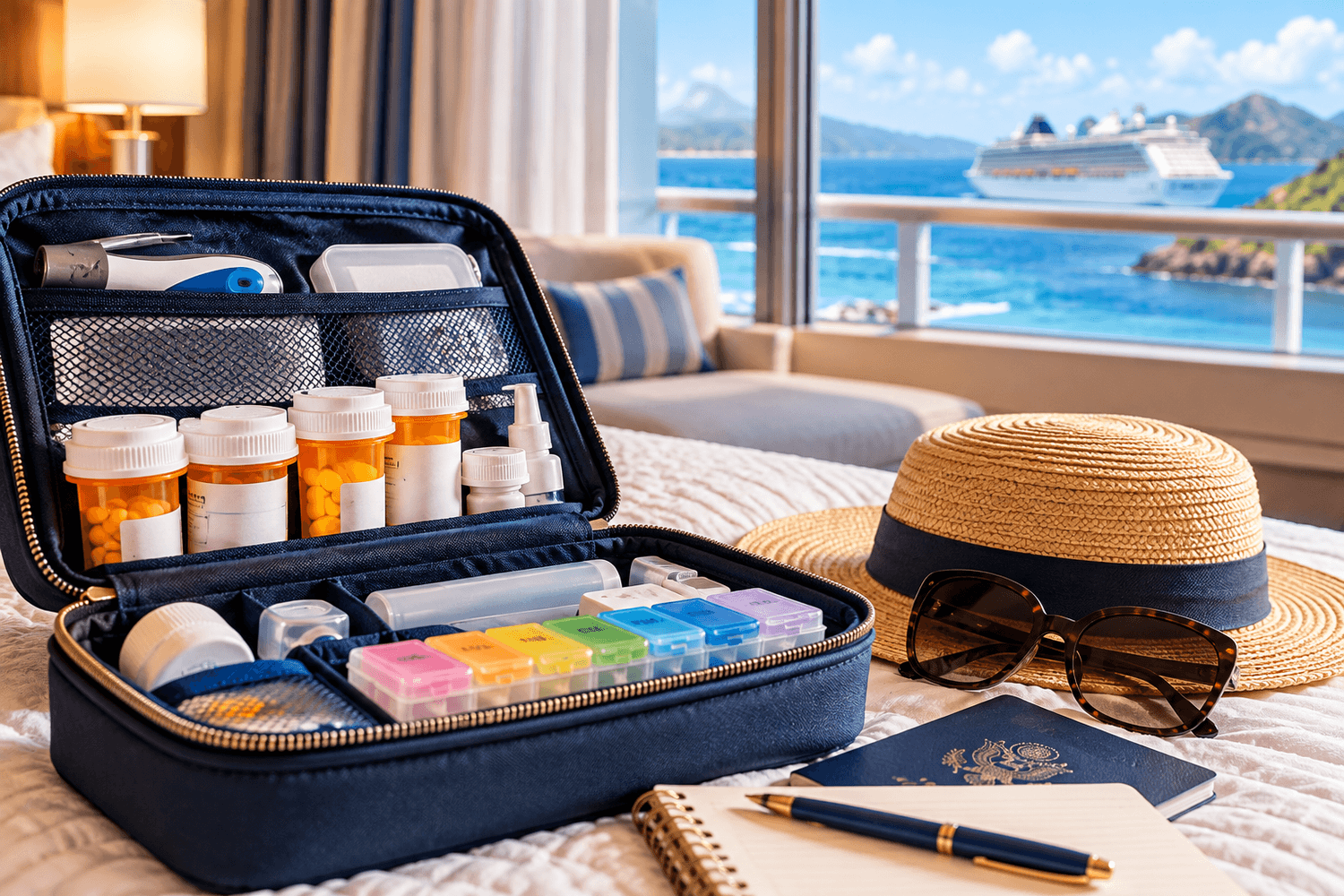
If you take prescription medication every day, packing for a cruise involves a little more planning than remembering your swimsuit and sunscreen.
The good news is that yes, you can bring prescription medication on a cruise. Millions of travelers sail with medications for blood pressure, diabetes, heart conditions, thyroid disorders, pain, anxiety, and countless other health conditions.
The part that can get complicated isn't usually bringing medication onto the ship. It's the fact that your cruise may visit several different countries, and each country can have its own rules about which medications travelers are allowed to bring across its borders.
A little preparation before you leave home can prevent a lot of unnecessary stress once you're traveling.
Can You Take Prescription Medication on a Cruise Ship?
Yes. Passengers routinely bring prescription medication onboard for their personal use.
The best approach is to pack everything you'll need for the trip before leaving home rather than assuming you'll be able to replace a medication onboard or in a cruise port.
This becomes especially important if you take medication that you cannot safely miss for several days.
Official Guidance From the CDC and U.S. State Department
Because most cruises involve international travel, it's worth checking the official recommendations before you pack.
The CDC's Traveling Abroad With Medicine guide recommends that international travelers bring enough medication for the entire trip plus extra in case of delays, carry medications in their carry-on luggage, keep them in their original labeled containers, and bring copies of their prescriptions. The CDC also recommends discussing special circumstances such as injectable medications, controlled substances, refrigeration, and time-zone changes with your healthcare provider.
The U.S. Department of State's Medicine and Health guidance also recommends checking the rules of each country you plan to visit or pass through, particularly if you take medications that may be restricted. A drug that is legally prescribed in the United States isn't automatically legal to bring into every other country.
Those two resources are worth bookmarking before an international cruise, especially if you take controlled medications or have more complicated medical needs.
Pack Your Medication in Your Carry-On
This is probably the easiest mistake to avoid.
Don't put medication you can't afford to be without in your checked luggage.
If you're flying to your embarkation port, checked luggage can be delayed or lost. And when you board your cruise, the luggage you hand over to the porters may not arrive at your cabin until later in the day.
Your essential medications should stay with you.
A small medication bag inside your cruise carry-on works well and keeps everything together.
Bring More Than You Need
If you're taking a seven-night cruise, don't leave home with exactly seven days of medication.
Flights get canceled. Weather causes delays. Ships occasionally change schedules. You could become ill while traveling or simply drop a pill down the sink.
Whenever possible, bring enough medication to cover your trip plus a few extra days.
If your insurance won't normally allow you to refill a prescription early, contact your pharmacy or insurance company before your trip and ask whether they can provide a vacation override.
Should You Use a Pill Organizer?
Many of us use pill organizers at home because they're convenient, particularly when taking several medications.
For international travel, however, it's safer to travel with the medication in its original pharmacy-labeled container.
You can still bring your pill organizer. Pack it empty and fill it once you're onboard if that's how you prefer to manage your daily medications.
That gives you the convenience of the organizer without having a week's worth of unidentified pills going through an airport or international customs inspection.
What About Controlled Medications?
This deserves special attention.
Some medications commonly prescribed in the United States may be controlled, restricted, or even prohibited in another country.
That can include certain:
Prescription pain medications
ADHD medications
Anxiety medications
Sleeping medications
Sedatives
Other controlled substances
The rules aren't identical everywhere.
If you take one of these medications, check the requirements for the countries on your cruise itinerary before you leave home. Depending on the destination, you may need additional documentation or permission to bring the medication into the country.
Don't assume that having your name printed on a U.S. prescription bottle automatically makes the medication legal everywhere you travel.
Bring a Medication List and Copies of Your Prescriptions
Even when you're traveling with routine medications, having a simple medication list can be extremely useful.
Include:
The name of each medication
The generic name
Your dosage
How often you take it
Any medication allergies
Your doctor's contact information
Keep the list somewhere easy to access.
If you unexpectedly need medical treatment onboard or ashore, you don't want to be trying to remember whether that little white blood-pressure pill is 25 mg or 50 mg while you're already sick or injured.
For travelers with significant medical conditions, injectable medications, or controlled substances, it may also be helpful to carry a letter from your healthcare provider explaining the condition and treatment.
Can You Bring Injectable Medications and Needles?
Yes. People who use insulin, injectable medications, epinephrine auto-injectors, and other prescribed injectable treatments travel every day.
Keep the medication and its supplies together rather than scattering needles, syringes, and medication throughout different pieces of luggage.
If you're flying to your cruise port, you'll also need to follow current airport security requirements for medically necessary liquids and injection supplies.
For international travel, documentation from your healthcare provider explaining why you need the medication and supplies can also be useful.
What If Your Medication Needs Refrigeration?
This is something you should arrange before your cruise, not after you're standing in your cabin holding medication that needs to stay cold.
Some cruise cabins have refrigerators or beverage coolers, but you shouldn't assume they're capable of maintaining the temperature required for a particular medication.
Contact the cruise line before sailing and ask what arrangements are available for storing refrigerated medication on your specific ship.
Also think about the entire journey—not just the cruise. You may need to keep the medication at the proper temperature while driving or flying to the port, staying overnight at a hotel, boarding the ship, and traveling home.
What About Changing Time Zones?
For most Caribbean cruises, this may be a minor issue. On longer cruises, transatlantic sailings, repositioning cruises, and some Mediterranean or other international itineraries, you may cross several time zones.
If you take medication on a strict schedule, ask your healthcare provider how they want you to handle the time changes.
Don't automatically switch your medication schedule simply because your phone or ship clock changes.
Can You Replace Medication in a Cruise Port?
Possibly, but this should be your backup plan—not your medication strategy.
The same drug may be sold under a different name in another country, available in a different strength, require a prescription, or not be readily available at all.
Medication quality can also vary. The CDC warns travelers about counterfeit and substandard medications sold internationally and recommends bringing the medicines you need from home whenever possible. CDC
If you unexpectedly need a prescription medication while cruising, contacting the ship's medical center is a sensible first step. They may be able to evaluate the situation and help you determine the safest way to obtain what you need.
What If You Forget Your Prescription Medication?
You unpack your suitcase, open your toiletry bag and suddenly realize your medication is sitting on the bathroom counter at home.
Now what?
Don't panic, but don't ignore it either.
What happens next will depend on the medication, how urgently you need it, your itinerary, and where the ship is sailing.
We've written a separate guide specifically for this situation:
Related: What Happens If You Forget Your Prescription Medication on a Cruise?
Prescription Medication Cruise Checklist
Before you leave home:
Pack enough medication for your entire trip plus several extra days.
Keep essential medications in your carry-on.
Leave medications in their original labeled containers while traveling.
Bring an empty pill organizer if you prefer using one onboard.
Carry a current medication and dosage list.
Bring copies of important prescriptions.
Check international restrictions for controlled or unusual medications.
Carry appropriate documentation for injectable medications and supplies.
Arrange refrigeration with the cruise line in advance if necessary.
Ask your healthcare provider about significant time-zone changes.
Don't depend on finding your exact medication in a cruise port.
Most of this takes only a little preparation before your trip, but it can make an enormous difference if something doesn't go according to plan.
Final Thoughts
Taking prescription medication shouldn't keep you from cruising.
For most people, the process is straightforward: bring what you need, pack a little extra, keep important medications with you, and know the rules before traveling internationally.
If you take controlled medications, require injections or refrigeration, or have a complicated medication schedule, give yourself a little more time to prepare and contact your healthcare provider or cruise line when necessary.
Then you can board the ship knowing your medications are handled—and move on to much more enjoyable cruise decisions.
Like whether having dessert at lunch and dinner counts as excessive when you're on vacation.
We vote no.
Related Articles
Medical Disclaimer
The information provided on Cruising Style is for general informational and educational purposes only and is not intended as medical advice, diagnosis, or treatment. Always consult your physician or other qualified healthcare provider regarding any medical condition, medication, or health concern and before making decisions that could affect your health while traveling. Cruise line policies, medical services, and international medication requirements can change, so verify current requirements with your cruise line and appropriate authorities before you travel.
Affiliate Disclosure: This article may contain affiliate links. If you make a purchase, book a cruise, or book a travel-related service through these links, I may earn a commission at no additional cost to you. As an Amazon Associate, I earn from qualifying purchases. Thank you for supporting Cruising Style.
Home | About | Contact | Privacy Policy | Terms of Service | Affiliate Disclosure