Can You Cruise With Oxygen?
What to Know About Portable Oxygen Concentrators
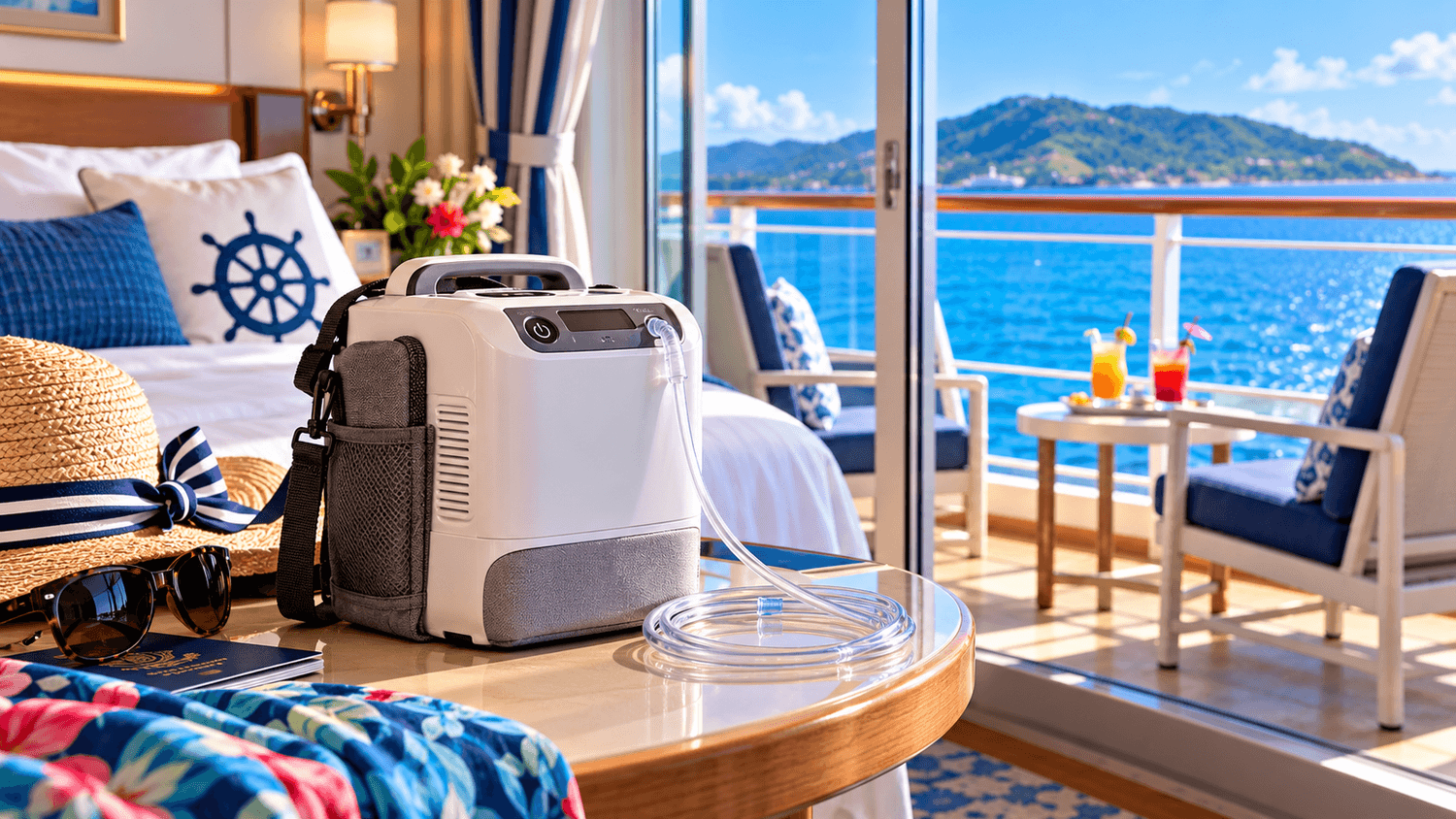
Needing supplemental oxygen doesn't automatically mean you have to give up cruising.
Many travelers who use oxygen at home can still enjoy a cruise vacation with the right medical guidance, equipment, and advance planning.
However, cruising with oxygen requires more preparation than packing your usual medications. You'll need to consider cruise line policies, equipment compatibility, electrical power, backup supplies, and possibly airline regulations.
The most important step is confirming that your medical condition is stable enough for travel and that your oxygen needs can be met throughout the trip.
Here's what to know before booking a cruise if you use supplemental oxygen.
Affiliate disclosure: This article contains affiliate links. We may earn a commission at no additional cost to you.
Can You Go on a Cruise If You Need Oxygen?
Yes. Many people who use supplemental oxygen can cruise safely with appropriate planning.
Using oxygen doesn't automatically disqualify someone from taking a cruise. However, whether cruising is appropriate depends on the person's underlying medical condition, oxygen requirements, and ability to manage treatment while traveling.
Before making a nonrefundable reservation, speak with the healthcare professional who manages your oxygen therapy.
Ask whether you're medically stable for cruising, whether your equipment is suitable for travel, and what precautions you should take.
This is especially important if you've recently experienced worsening shortness of breath, a respiratory infection, hospitalization, or changes in your oxygen requirements.
You should also contact the cruise line to verify its policies for oxygen equipment and medical accommodations.
What Is a Portable Oxygen Concentrator?
A portable oxygen concentrator, often called a POC, is a medical device that takes in surrounding air and concentrates oxygen for the person using it.
Unlike traditional oxygen cylinders, it doesn't rely on a limited supply of stored compressed oxygen.
Portable concentrators are designed to make oxygen therapy more convenient during travel. Depending on the model, they may operate using rechargeable batteries, electrical outlets, or both.
However, not every portable oxygen concentrator delivers oxygen in the same way.
Pulse-Dose vs. Continuous-Flow Oxygen
Some portable concentrators use pulse-dose delivery, releasing oxygen when the device detects a breath.
Other models provide continuous-flow oxygen, delivering oxygen at a prescribed rate.
These systems are not interchangeable.
A pulse-dose setting of 2, for example, does not necessarily deliver the same amount of oxygen as continuous flow at 2 liters per minute.
Some people require continuous-flow oxygen, particularly during sleep, and certain portable concentrators may not meet those needs.
Never assume a portable oxygen concentrator is suitable simply because it's small enough to travel with.
Your oxygen-prescribing healthcare professional and equipment supplier should confirm that the specific model meets your prescribed needs during rest, sleep, and activity.
Are Portable Oxygen Concentrators Allowed on Cruise Ships?
Many cruise lines permit passengers to bring portable oxygen concentrators onboard.
However, their notification and equipment requirements vary.
For example:
Carnival Cruise Line
Carnival permits personal oxygen concentrators onboard without requiring advance approval or notification. Passengers must bring their own equipment and supplies and carry them during embarkation rather than placing them in checked luggage.
Oxygen cylinders have different requirements, including advance coordination with Carnival's Access Team.
Royal Caribbean
Royal Caribbean permits oxygen equipment but requires guests who depend on oxygen to contact its Access Department about their arrangements.
Passengers must supply their own oxygen, and requirements for cylinders, quantities, deliveries, and storage may vary by ship.
These examples illustrate why you should verify the policies of your specific cruise line rather than assuming all ships follow identical procedures.
Even when advance notification isn't mandatory, contacting the cruise line before departure is sensible if you have questions about power supplies, equipment storage, or accessibility.
Can You Bring Oxygen Tanks on a Cruise?
Some cruise lines allow medical oxygen cylinders, but they may impose additional requirements.
Oxygen cylinders contain compressed oxygen and must be transported and stored safely.
Depending on the cruise line, passengers may need to provide information about the number and size of cylinders they plan to bring.
Some cruise lines also require coordination with approved medical equipment suppliers.
Do not assume you can bring oxygen cylinders onboard without advance arrangements.
It's equally important to understand that cruise ships generally cannot refill personal oxygen cylinders.
If you depend on cylinders, work with your oxygen supplier to calculate how much oxygen you'll need for the entire voyage, including possible delays.
Liquid oxygen systems may be subject to different policies. Confirm whether your particular equipment is permitted before booking.
Do Cruise Ships Provide Oxygen for Passengers?
Cruise ships have medical facilities equipped to respond to certain medical emergencies, which may include administering oxygen.
However, that doesn't mean the ship provides routine oxygen therapy or replacement supplies for passengers who use oxygen every day.
You should not rely on the ship's medical center to provide your regular oxygen supply.
Passengers who need supplemental oxygen generally must bring their own equipment or arrange for appropriate supplies to be delivered before sailing.
Some cruise lines work with medical equipment rental companies that can coordinate delivery to the ship.
These arrangements should be completed well before departure.
Can You Rent an Oxygen Concentrator for a Cruise?
Depending on the cruise line and embarkation port, renting oxygen equipment may be an option.
Certain medical equipment suppliers specialize in cruise travel and can arrange delivery of concentrators, cylinders, and other supplies.
Before renting, confirm:
Whether the supplier serves your cruise line and departure port
Whether the equipment meets your prescribed oxygen requirements
What batteries and accessories are included
How and when the equipment will be delivered
Who is responsible for returning the equipment
What assistance is available if the device malfunctions
Don't assume a rental concentrator will work with your existing accessories or provide the same oxygen delivery as your equipment at home.
Have your healthcare provider or oxygen supplier verify its suitability.
How Do You Power an Oxygen Concentrator on a Cruise Ship?
Many portable oxygen concentrators can operate using cabin electrical power.
However, cruise ship electrical outlets vary, and not every cabin has an outlet conveniently located near the bed.
Before sailing, confirm the electrical requirements of your concentrator and the outlets available in your stateroom.
You should also ask about restrictions on extension cords, power strips, and adapters.
Some cruise lines prohibit certain electrical accessories because of fire safety concerns.
Never use an unauthorized extension cord or power strip with medical equipment.
If you require an accommodation for your oxygen equipment, contact the cruise line's accessibility department before departure.
What About Backup Batteries?
Battery planning is particularly important if you depend on a portable oxygen concentrator.
Battery life varies by device, oxygen setting, battery size, and operating conditions.
A battery advertised to last several hours may provide substantially less operating time at higher oxygen settings.
Ask your equipment supplier to help determine how much backup power you'll need for embarkation, excursions, transportation, and unexpected interruptions.
If you require oxygen continuously, discuss a medically appropriate emergency backup plan before traveling.
What Happens If Your Oxygen Concentrator Stops Working?
A malfunctioning concentrator can become a serious medical problem for someone who depends on continuous oxygen therapy.
Cruise ships generally cannot guarantee replacement equipment, compatible batteries, or repairs for personal medical devices.
Before leaving home, make sure you understand your device's alarms and basic troubleshooting procedures.
Bring essential accessories, permitted backup batteries, and contact information for your equipment supplier.
If appropriate for your medical needs, discuss backup oxygen arrangements with your healthcare provider.
If your concentrator stops working and you cannot maintain your prescribed oxygen therapy, contact the ship's medical center immediately.
Do not wait for symptoms to become severe.
Can You Fly With a Portable Oxygen Concentrator?
If you're flying to your cruise departure port, you'll need to follow airline requirements as well as cruise line policies.
In the United States, qualifying portable oxygen concentrators are permitted for use aboard covered flights when applicable requirements are met.
The device must either be an accepted model or carry the appropriate manufacturer's label indicating that it meets FAA requirements.
Airlines may require advance notification and medical documentation.
How Many Batteries Do You Need?
An airline may require enough fully charged batteries to operate your concentrator for at least 150% of the flight duration.
For example, a four-hour flight could require enough battery power for at least six hours.
Your actual battery needs depend on your device's operating time at the prescribed setting and the airline's requirements.
Spare lithium batteries must be transported in accordance with aviation safety rules, including protection against short circuits.
Contact your airline well before departure to verify its specific requirements.
Can You Fly With Oxygen Tanks?
Personal compressed oxygen cylinders and liquid oxygen systems are subject to much stricter aviation restrictions.
On U.S. flights, passengers generally cannot bring their own compressed or liquid oxygen supplies in baggage.
Qualifying portable oxygen concentrators are treated differently because they concentrate oxygen from the surrounding air rather than carrying a stored oxygen supply.
If you use oxygen cylinders at home, you'll need to coordinate an appropriate travel arrangement with your healthcare provider, airline, and oxygen supplier.
Also remember that your oxygen needs may change during flight because aircraft cabins are pressurized to an altitude higher than sea level.
Your healthcare provider should determine whether your usual oxygen prescription is appropriate for flying.
Can You Use a Portable Oxygen Concentrator on Shore Excursions?
Many passengers can use portable oxygen concentrators while visiting cruise ports.
However, excursions can involve long walks, heat, humidity, uneven surfaces, and limited access to electrical power.
Before booking an excursion, consider how long you'll be away from the ship and whether you have enough battery capacity for the entire outing.
You'll also want to consider transportation accessibility and the physical demands of the activity.
A sightseeing tour with convenient transportation may be more suitable than a strenuous hiking excursion.
Some excursion operators have restrictions on medical equipment, so contact the operator or cruise line before booking.
What About Tender Ports?
At some destinations, cruise ships anchor offshore and transport passengers to land using smaller boats called tenders.
Tendering may involve steps, moving platforms, and changing sea conditions.
Passengers with limited mobility or certain medical equipment may encounter additional challenges.
If you use oxygen equipment, ask the cruise line about tender accessibility and whether your equipment can be accommodated safely.
Even when tendering is normally available, rough seas can prevent some passengers from going ashore.
Consider this when choosing an itinerary.
What If You Need More Oxygen During Your Cruise?
Cruise vacations sometimes involve more walking and physical activity than your normal daily routine.
Heat, humidity, stairs, and excursions may also affect your breathing and endurance.
Before traveling, discuss activity limitations and oxygen management with your healthcare provider.
Do not change your prescribed oxygen settings without appropriate medical guidance.
If you experience worsening shortness of breath, chest pain, fainting, confusion, or other concerning symptoms, seek immediate medical attention.
The ship's medical team can assess your condition and determine whether additional treatment or hospitalization is necessary.
Is One Cruise Ship Better Than Another for Oxygen Users?
The most suitable cruise depends on your medical needs, mobility, equipment, and travel preferences.
If you use supplemental oxygen, consider choosing a ship and itinerary that minimize unnecessary physical demands.
Helpful considerations include:
Convenient access to elevators
A cabin location that reduces long walks
Accessible stateroom features if needed
Fewer tender ports
Shore excursions suited to your abilities
Convenient embarkation and disembarkation arrangements
Access to appropriate medical care at destinations
You may also prefer a shorter cruise if you're uncertain how you'll manage your oxygen therapy while traveling.
A shorter itinerary doesn't eliminate medical risks, but it may simplify some travel arrangements.
Does Travel Insurance Cover Oxygen-Related Medical Emergencies?
Travel insurance can be particularly important for passengers with chronic medical conditions.
Medical treatment aboard a cruise ship or in a foreign hospital can be expensive, and medical evacuation may involve substantial additional costs.
However, not every travel insurance policy covers complications related to pre-existing medical conditions.
Some plans offer a pre-existing condition exclusion waiver when specific eligibility requirements are satisfied.
These may include purchasing insurance within a designated period after your initial trip payment and meeting other policy conditions.
When comparing coverage, pay particular attention to emergency medical benefits, medical evacuation, trip interruption, and pre-existing condition provisions.
Compare Cruise Travel Insurance Plans to review available coverage and find a policy that fits your needs and itinerary.
Always read the actual policy documents and confirm how coverage applies to your medical circumstances before purchasing.
Official Guidance for Traveling With Oxygen
These resources provide additional information about traveling with medical conditions and oxygen equipment.
CDC — Travelers With Chronic Illnesses
The CDC recommends pretravel medical planning, adequate medication and equipment supplies, and advance coordination with airlines and cruise lines when special assistance is needed.
FAA — Portable Oxygen Concentrators
The FAA explains requirements for portable oxygen concentrators and battery safety during air travel.
For cruise-specific requirements, consult your cruise line's accessibility or special needs department before departure.
Oxygen Travel Checklist Before Your Cruise
Discuss your travel plans with your oxygen-prescribing healthcare provider.
Confirm that your condition is stable enough for cruising.
Verify that your equipment meets your oxygen needs during rest, activity, and sleep.
Check your cruise line's oxygen equipment policies.
Arrange oxygen supplies or equipment rentals if needed.
Confirm cabin electrical requirements.
Prepare an appropriate backup power and equipment plan.
Verify airline rules if flying.
Bring prescriptions, relevant medical information, and supplier contact details.
Research excursion accessibility and tender ports.
Review emergency medical and evacuation insurance coverage.
Carry essential equipment and supplies during embarkation rather than placing them in checked luggage.
Final Thoughts
Needing supplemental oxygen doesn't necessarily mean you have to miss out on cruising.
Many people who use oxygen can enjoy a vacation at sea with suitable equipment, medical clearance, and thoughtful preparation.
The key is making sure your oxygen needs can be met throughout the trip—not just while you're relaxing in your cabin, but also during transportation, excursions, and unexpected delays.
By planning ahead and understanding your cruise line's requirements, you can focus on enjoying your vacation with greater confidence.
Related Articles
Medical Disclaimer
The information provided on Cruising Style is for general informational and educational purposes only and is not intended as medical advice, diagnosis, or treatment. Always consult your physician or other qualified healthcare provider regarding any medical condition, medication, or health concern and before making decisions that could affect your health while traveling. Cruise line policies, medical services, and international medication requirements can change, so verify current requirements with your cruise line and appropriate authorities before you travel.
Affiliate Disclosure: This article may contain affiliate links. If you make a purchase, book a cruise, or book a travel-related service through these links, I may earn a commission at no additional cost to you. As an Amazon Associate, I earn from qualifying purchases. Thank you for supporting Cruising Style.
Home | About | Contact | Privacy Policy | Terms of Service | Affiliate Disclosure